
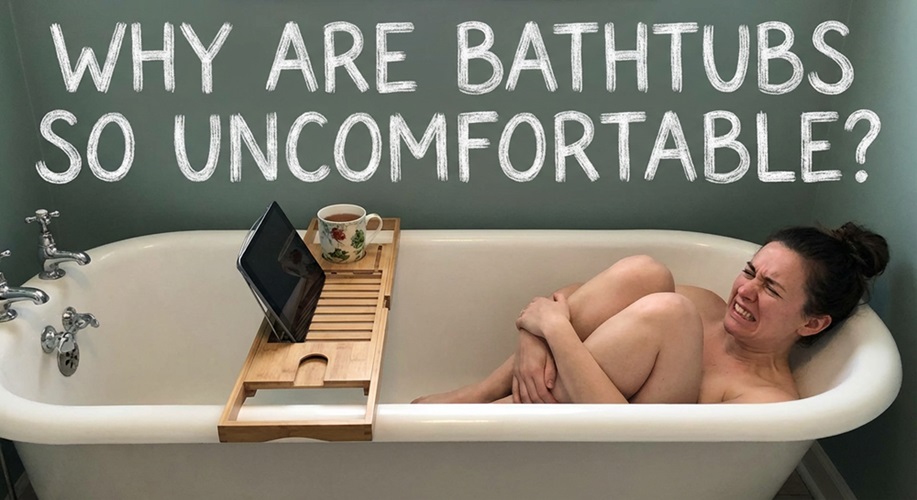
Ever climbed into a bathtub expecting relaxation and ended up with a sore back instead?
You’re not imagining it. Most bathtubs genuinely are uncomfortable—and there are real reasons why.
The problem isn’t you. It’s outdated designs, unforgiving materials, and a frustrating lack of ergonomic thinking in bathroom fixtures. The good news? You don’t have to live with it.
Let’s explore exactly why bathtubs cause discomfort and what you can actually do about it.
Bathtubs feel uncomfortable primarily because of:
→ Generic “one-size-fits-all” designs that fit almost nobody perfectly
→ Hard, unforgiving materials like porcelain and fiberglass
→ Missing ergonomic support for your neck, back, and arms
→ Poor heat retention that turns warm baths lukewarm fast
→ Slippery or rough surfaces that make relaxing impossible
The solution? Either upgrade to a better-designed tub or modify your current one with targeted accessories and improvements.
Why Your Bathtub Feels So Uncomfortable
After decades of using bathtubs in homes, hotels, and rentals across the country, patterns emerge. Here’s what’s actually causing your discomfort:
🛁 Problem #1: Design That Ignores Your Body
What’s happening:
Most bathtubs are designed for manufacturing efficiency—not human comfort. That sloped back? It’s an arbitrary angle that rarely matches anyone’s natural spine curve.
You lean back expecting support. Instead, you get:
- Pressure points on your lower back
- Neck strain from awkward head positioning
- Knees bent at uncomfortable angles
- Shoulders with nowhere to rest
The reality:
Bathtub manufacturers historically prioritized:
- Easy installation
- Standard sizing for mass production
- Cost-effective materials
- Simple shapes that stack and ship well
Your comfort? An afterthought at best.
🛁 Problem #2: Materials Built for Durability, Not Comfort
What’s happening:
Touch the inside of most bathtubs. What do you feel?
Cold. Hard. Unyielding.
Common bathtub materials include:
| Material | Durability | Comfort Level | Heat Retention |
|---|---|---|---|
| Porcelain/Enamel | Excellent | Poor | Poor |
| Fiberglass | Good | Poor | Fair |
| Acrylic | Good | Fair | Good |
| Cast Iron | Excellent | Poor | Excellent (once warmed) |
| Cultured Marble | Good | Fair | Fair |
| Copper | Excellent | Fair | Excellent |
The problem:
Most affordable tubs use fiberglass or basic acrylic—materials that offer zero cushioning. It’s like expecting comfort from a ceramic tile floor.
🛁 Problem #3: Zero Ergonomic Support
What’s happening:
Your office chair probably has lumbar support, adjustable armrests, and a headrest. Your bathtub? A slick curved surface and hope.
Missing ergonomic elements include:
- Proper lumbar curve support
- Neck and head cradling
- Armrest positioning
- Appropriate seat depth and angle
- Support for different body heights
Why it matters:
Without ergonomic support, your muscles work overtime to hold positions that should be relaxing. A 30-minute soak becomes 30 minutes of subtle strain.
🛁 Problem #4: The Temperature Problem
What’s happening:
You run a perfectly hot bath. Ten minutes later, it’s lukewarm. Twenty minutes in, you’re debating whether to add more hot water or just give up.
The culprits:
- Thin tub walls that transfer heat to surrounding air
- Poor insulation between tub and subfloor
- Large surface area exposing water to cooler bathroom air
- Metal fixtures conducting heat away from water
- Drafty bathrooms accelerating cooling
The frustration:
You can’t truly relax when you’re constantly monitoring water temperature or running the hot tap every few minutes.
🛁 Problem #5: Rough or Slippery Surfaces
What’s happening:
Some tubs feel like sandpaper. Others feel like skating rinks. Neither works for relaxation.
Causes of rough surfaces:
- Mineral deposits from hard water
- Years of abrasive cleaning products
- Worn enamel or finish deterioration
- Manufacturing texture choices
- Soap scum buildup
Causes of slippery surfaces:
- Smooth acrylic or fiberglass finishes
- Soap and oil residue
- Worn anti-slip textures
- Water acting as lubricant
Either way:
You’re focused on not sliding around instead of actually relaxing.
🛁 Problem #6: Size Mismatches
What’s happening:
Standard bathtubs measure roughly 60 inches long by 30-32 inches wide. If you’re taller than 5’8″ or broader than average, you’re cramped. If you’re petite, you’re swimming.
The mismatch reality:
| Your Height | Standard Tub Experience |
|---|---|
| Under 5’2″ | Can’t reach back support; too deep |
| 5’2″ – 5’7″ | Often works reasonably well |
| 5’8″ – 6’0″ | Knees up or legs cramped |
| Over 6’0″ | Genuinely uncomfortable; nothing fits |
The problem:
One size fits all means one size fits few.
🛁 Problem #7: Accessibility Challenges
What’s happening:
Getting in and out of a traditional bathtub requires:
- Stepping over a 14-18 inch wall
- Balancing on one foot on a wet surface
- Lowering yourself without handholds
- Reversing the process while wet and tired
Who struggles:
- Anyone with mobility limitations
- People recovering from surgery or injury
- Older adults with balance concerns
- Anyone with joint pain or arthritis
- Parents bathing small children
The oversight:
Traditional tubs weren’t designed with accessibility in mind—period.
Why Does My Bathtub Feel Rough?
That sandpaper texture under your skin isn’t your imagination. Here’s what causes it:
Mineral Buildup
Hard water leaves calcium and magnesium deposits that create a gritty texture over time. Common in areas with hard water supplies.
Cleaning Damage
Years of scrubbing with abrasive cleaners, steel wool, or harsh chemicals wear down smooth finishes.
Finish Deterioration
Enamel and acrylic surfaces break down with age, temperature fluctuations, and chemical exposure.
Etching
Acidic products (certain cleaners, bath bombs, citrus-based products) can etch and pit surfaces.
Manufacturing Texture
Some budget tubs have naturally textured finishes that feel rough from day one.
How to Make Your Bathtub Comfortable
Ready for solutions? Here’s how to transform your bathing experience—whether you’re modifying your current tub or shopping for a new one.
✅ Solution #1: Add Comfort Accessories
The fastest, most affordable fixes:
Bath Pillows
Modern bath pillows use suction cups to stay in place, providing neck and head support. Look for:
- Quick-dry mesh materials (prevents mold)
- Multiple suction cups for stability
- Ergonomic contours matching neck curves
- Machine-washable options
Non-Slip Bath Mats
Quality mats transform slippery tubs into secure surfaces:
- Strong suction cups that actually grip
- Cushioned surfaces for comfort
- Drainage holes preventing water pooling
- Antimicrobial materials resisting mildew
Bath Cushions and Pillows
Full-body bath cushions provide:
- Lumbar support where you need it
- Softer surface than bare tub
- Adjustable positioning
- Improved overall comfort
Inflatable Additions
For temporary solutions:
- Inflatable bath pillows
- Portable back supports
- Cushioned armrest attachments
✅ Solution #2: Improve Heat Retention
Keep your bath warmer, longer:
Bubble Bath Strategy
A thick layer of bubbles creates insulation on the water surface, significantly slowing heat loss.
Bath Covers
Floating thermal covers (similar to hot tub concepts) trap heat between uses and during soaks.
Preheat Your Tub
Run hot water in the tub for a minute before filling. This warms the tub surface so it doesn’t steal heat from your bath water.
Close the Drain Differently
Start filling with the drain closed. Don’t let any hot water escape while adjusting temperature.
Bathroom Heating
A warmer bathroom means slower heat transfer from your bath. Consider:
- Space heaters (safely positioned away from water)
- Heated towel racks
- Better bathroom insulation
Hot Water Refresh System
For existing tubs, some fixtures allow slow hot water addition without overflow—maintaining temperature throughout your soak.
✅ Solution #3: Fix Rough Surfaces
Restore smoothness step by step:
Step 1: Deep Clean
- Mix baking soda with water to form paste
- Apply to rough areas
- Scrub gently with soft brush
- Rinse thoroughly
- For mineral deposits: white vinegar soak
Step 2: Remove Minor Imperfections
- Use automotive polish or tub refinishing compound
- Apply with soft cloth
- Buff in circular motions
- Wipe clean
Step 3: Address Deeper Damage
- Wet 600-800 grit sandpaper with soapy water
- Gently sand rough spots in circular motions
- Rinse and assess
- Repeat if needed
Step 4: Protect the Surface
- Apply non-abrasive automotive or marine wax
- Thin, even coat over entire surface
- Let dry to haze
- Buff to shine
Step 5: Maintain Properly
- Use only non-abrasive cleaners going forward
- Soft cloths or sponges only
- Rinse after each use
- Address buildup weekly, not monthly
✅ Solution #4: Choose Better Design When Buying New
If you’re shopping for a new tub, prioritize these features:
Ergonomic Contours
Look for tubs specifically designed around body curves:
- Lumbar support built into back slope
- Contoured neck rest area
- Armrest ledges at natural heights
- Graduated depth supporting various positions
Proper Sizing
| Your Body Type | Recommended Tub Dimensions |
|---|---|
| Petite (under 5’2″) | 54-60″ L × 28-32″ W × 14-18″ D |
| Average (5’2″ – 5’7″) | 60-66″ L × 30-34″ W × 15-19″ D |
| Tall (5’8″ – 6’0″) | 66-72″ L × 32-36″ W × 16-20″ D |
| Very Tall (over 6’0″) | 72″+ L × 34-36″ W × 18-22″ D |
Material Selection
For comfort, consider:
- High-quality acrylic — Warmer to touch, retains heat well
- Heated surface tubs — Built-in heating maintains warmth
- Copper — Natural heat retention, antimicrobial properties
- Stone resin — Warm feel, excellent heat retention
- Insulated designs — Foam backing prevents heat loss
Built-In Features
Premium tubs may include:
- Integrated headrests
- Molded armrests
- Non-slip textured floors
- Grab bar mounting points
- Heated backrests
- Chromotherapy lighting
- Air or water jets for massage
✅ Solution #5: Add Accessibility Features
Make entry and exit safer and easier:
Grab Bars
- Install near tub entry point
- Add another for sitting/standing support
- Choose styles rated for wet environments
- Consider permanent or removable options
Transfer Benches
- Sit outside tub, slide across, swing legs in
- Eliminates high stepping requirement
- Available in various widths and styles
Non-Slip Solutions
- Adhesive strips on tub floor
- Full-coverage textured mats
- Applied coatings for permanent texture
Walk-In Tub Options
For significant accessibility needs:
- Door entry eliminates stepping over
- Built-in seating at comfortable height
- Integrated grab bars
- Lower threshold designs
- Quick-drain features
Step Stools
- Reduces effective step-over height
- Non-slip surfaces essential
- Sturdy construction mandatory
Bathtub Comfort: Quick Fixes vs. Long-Term Solutions
| Problem | Quick Fix | Long-Term Solution |
|---|---|---|
| Hard surface | Bath mat or cushion | Upgrade to softer material tub |
| No back support | Bath pillow | Ergonomic contoured tub |
| Cold water | Bubble insulation layer | Better insulated tub or inline heater |
| Rough texture | Polish and wax | Professional refinishing or replacement |
| Wrong size | Adjust position with accessories | Properly sized new tub |
| Slippery surface | Non-slip mat | Textured bottom tub or applied coating |
| No head support | Suction cup pillow | Built-in headrest tub |
| Difficult entry | Grab bars | Walk-in tub or accessibility remodel |
Best Bathtub Types for Comfort
Freestanding Soaking Tubs
- Deeper water immersion
- Often more ergonomic designs
- Premium materials common
- Statement piece aesthetics
Japanese Soaking Tubs
- Deep vertical design
- Seated position (not reclined)
- Full shoulder immersion
- Compact footprint
Walk-In Tubs
- Door entry for accessibility
- Built-in seating
- Safety features standard
- Various depths available
Alcove Tubs (Upgraded)
- Fits standard spaces
- Look for ergonomic versions
- Can include built-in features
- Most affordable option
Corner Tubs
- More interior space
- Often includes seating areas
- Fits unused corner areas
- Can accommodate two people
Drop-In Tubs
- Custom surround possibilities
- Wide rim for accessories
- Various shapes available
- Deck-mounted faucets
Bathtub Materials Ranked by Comfort
Most Comfortable:
- Stone Resin/Composite — Warm to touch, excellent heat retention, smooth finish
- Copper — Naturally warm, retains heat excellently, develops character
- High-End Acrylic — Warm feel, good insulation, smooth surface
- Cast Iron (Warmed) — Once heated, retains warmth exceptionally well
Moderately Comfortable:
- Standard Acrylic — Better than fiberglass, decent heat retention
- Cultured Marble — Smooth surface, moderate heat retention
Least Comfortable:
- Fiberglass — Cold, thin, poor heat retention
- Porcelain on Steel — Cold, hard, heat transfers quickly
- Basic Enamel — Hard surface, chips easily, cold feel
Regional Considerations for Bathtub Comfort
Cold Climate Areas (Northern US, Canada)
- Prioritize heat retention above all
- Insulated tub backs essential
- Bathroom heating impacts comfort significantly
- Cast iron or stone resin excel here
Hard Water Regions (Southwest, Midwest)
- Smooth, non-porous surfaces resist buildup
- Easy-clean materials prevent roughness
- Water softener systems help long-term
- Regular maintenance more important
Humid Climates (Southeast, Gulf Coast)
- Quick-dry accessories prevent mold
- Antimicrobial materials beneficial
- Ventilation affects accessory longevity
- Mildew-resistant bath pillows essential
Small Home/Apartment Dwellers (Urban Areas)
- Japanese soaking tubs maximize small spaces
- Corner tubs utilize unused areas
- Deep rather than long provides better soaking
- Portable comfort accessories compensate for basic tubs
Frequently Asked Questions
Why do bathtubs hurt my back?
Bathtubs hurt your back because the sloped surface doesn’t match your spine’s natural curve. Without lumbar support, your lower back muscles strain to maintain position. Additionally, hard surfaces create pressure points. Solutions include ergonomic bath pillows, lumbar support cushions, or tubs designed with anatomically correct back slopes.
How can I make my bathtub more comfortable without buying a new one?
Add a quality bath pillow for head and neck support, place a cushioned bath mat for softer seating, use a lumbar support pillow against the back slope, ensure water temperature stays warm with bubble insulation, and consider inflatable bath cushions for full-body comfort. These accessories transform uncomfortable tubs affordably.
What is the most comfortable bathtub material?
Stone resin composites and high-quality acrylic provide the best comfort combination—warm to touch, excellent heat retention, and smooth surfaces. Copper offers superior heat retention with natural antimicrobial properties. Cast iron excels at maintaining temperature once warmed but feels cold initially. Avoid basic fiberglass for comfort-focused installations.
Why does my bath water get cold so fast?
Thin tub walls, poor insulation, large surface area exposure, cold bathroom air, and metal fixtures conducting heat away all contribute to rapid cooling. Combat this with bubble bath insulation layers, bathroom heating, preheating the tub surface before filling, and choosing better-insulated tub materials.
How do I fix a rough bathtub surface?
Clean thoroughly with baking soda paste to remove buildup. For minor roughness, apply automotive polish and buff with soft cloth. For deeper texture issues, wet-sand with 600-800 grit sandpaper using soapy water. Finish with non-abrasive wax coating to protect and seal the smoothed surface.
What size bathtub do I need for comfort?
Measure your height and add 6-8 inches for ideal tub length. For width, consider shoulder breadth plus room to adjust position—typically 32-36 inches for most adults. Depth should allow water to cover your shoulders when seated—usually 16-20 inches. Test tubs in person when possible before purchasing.
Are walk-in tubs more comfortable than regular tubs?
Walk-in tubs prioritize accessibility over traditional soaking comfort. They offer easier entry, built-in seating, and safety features, but require waiting for fill and drain cycles. Seated position differs from reclined soaking. They’re excellent for accessibility needs but may not satisfy those seeking deep immersion relaxation.
How long should a comfortable bath last?
Most dermatologists recommend 15-30 minutes maximum for skin health. Beyond 30 minutes, skin becomes overly hydrated and more susceptible to damage. For comfort, this timeframe works well—most discomfort issues compound over longer durations. Quality beats quantity for bathing.
Can I make a hotel bathtub more comfortable?
Pack a travel bath pillow (inflatable versions pack small). Request extra towels to roll for lumbar support. Use bubble bath for heat insulation. Check water temperature before fully filling. Request a room with a better tub if comfort matters significantly for your stay.
Why are Japanese soaking tubs considered more comfortable?
Japanese soaking tubs allow seated immersion to shoulder level in less floor space. The upright position reduces back strain compared to awkward reclined angles. Deeper water provides full-body warmth. Traditional designs prioritize the soaking experience over bathing functionality.
The Bottom Line
Bathtubs feel uncomfortable because most weren’t designed with your body in mind. Mass production, cost-cutting, and outdated design thinking created a world of tubs that look fine but feel terrible.
You have options.
Quick fixes—pillows, mats, cushions—make immediate differences for minimal investment. Surface restoration brings back smoothness without replacement. And when it’s time for a new tub, prioritizing ergonomics, materials, and proper sizing transforms bathing from tolerable to genuinely relaxing.
Your bathroom should be a retreat, not an endurance test. Make it comfortable.