
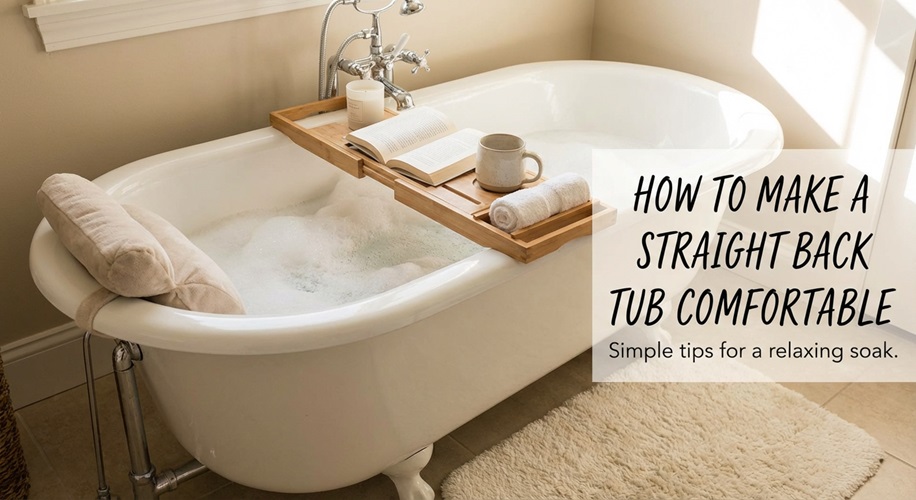
You’re not alone. Straight-back tubs prioritize practicality over comfort—and your body knows it. That rigid 90-degree angle works against everything your spine needs to unwind.
But here’s the thing: you don’t need to rip out your tub or suffer through uncomfortable soaks. With the right modifications, accessories, and techniques, even the most unforgiving straight-back tub becomes genuinely comfortable.
Let’s fix this.
To make a straight-back tub comfortable:
→ Add lumbar support pillows or cushions designed for bath use
→ Use non-slip mats for stability and positioning control
→ Optimize water temperature and depth for muscle relaxation
→ Incorporate bath accessories that support your body
→ Create an ambient environment that promotes relaxation
→ Experiment with positioning until you find your comfort zone
The biggest game-changer? Proper lumbar support. It addresses the primary design flaw of straight-back tubs instantly.
Why Straight-Back Tubs Feel So Uncomfortable
Before solving the problem, let’s understand exactly what’s working against you.
🚿 Problem #1: Zero Lumbar Support
What’s happening:
Your lower spine has a natural inward curve called lordosis. When you sit against a flat, vertical surface, that curve gets zero support—forcing your back muscles to work overtime.
Straight-back tubs essentially ask your spine to flatten against a wall. That’s not relaxation. That’s strain.
The result:
- Lower back tension builds within minutes
- Muscles fatigue instead of releasing
- Existing back pain intensifies
- You can’t stay comfortable for meaningful soak time
The reality:
Curved and contoured tubs cradle your spine’s natural shape. Straight-back tubs ignore it entirely.
🚿 Problem #2: The 90-Degree Angle Problem
What’s happening:
Sitting bolt upright isn’t a relaxation position. Your body naturally wants to recline—even slightly—to release muscle tension.
Straight-back tubs force you into an alert, seated position. It’s like trying to nap in a waiting room chair.
What your body wants:
- 100-120 degree hip angle (slight recline)
- Supported head and neck
- Relaxed shoulder position
- Weight distributed across larger surface area
What straight-back tubs provide:
- 90-degree rigid angle
- No head support
- Shoulders hunched or unsupported
- Weight concentrated on tailbone
🚿 Problem #3: No Place to Rest
What’s happening:
After a long day, your muscles carry tension. They need proper support to release that tension during a bath.
Straight-back tubs offer:
- Hard, unyielding surfaces
- No armrest areas
- No neck or head support
- No contouring for body curves
Without support, your muscles can’t fully let go. You’re fighting the tub instead of relaxing in it.
🚿 Problem #4: Sliding and Repositioning
What’s happening:
Smooth, slippery tub surfaces combined with water and soap create constant sliding. You spend mental energy staying in position instead of relaxing.
Every few minutes, you’re:
- Readjusting your position
- Bracing yourself from sliding down
- Tensing muscles to stay put
- Breaking relaxation to reposition
How to Make Your Straight-Back Tub Comfortable
Here’s everything that actually works—tested and proven solutions for transforming uncomfortable straight-back tubs.
✅ Solution #1: Add Proper Lumbar Support
This is the single most important change you can make.
Bath Pillows with Lumbar Design
Modern bath pillows aren’t the flimsy things from decades past. Quality options now include:
- Full-back support pillows — Cover from lower back to head
- Dedicated lumbar cushions — Target the lower back specifically
- Ergonomic contoured designs — Match natural spine curves
- Multi-panel systems — Separate head, neck, and back support
What to look for:
| Feature | Why It Matters |
|---|---|
| Strong suction cups | Stays in place when you lean back |
| Quick-dry mesh material | Prevents mold and mildew |
| Ergonomic contouring | Matches your spine’s natural curve |
| Adequate thickness | Actually provides cushioning (2+ inches) |
| Machine washable | Easy maintenance |
| Waterproof core | Won’t get waterlogged and heavy |
DIY Alternative:
Roll a towel to approximately 4-6 inches in diameter. Place it horizontally behind your lower back. Not as good as purpose-built pillows, but effective for testing whether lumbar support helps you.
✅ Solution #2: Stabilize Your Position
Stop sliding. Start relaxing.
Non-Slip Bath Mats
A quality non-slip mat serves two purposes:
- Safety (obviously)
- Gives you traction to maintain comfortable positioning
Look for:
- Strong suction cups (dozens, not just corners)
- Cushioned surface for comfort
- Drainage holes preventing water pooling
- Full tub floor coverage
- Antimicrobial materials
Non-Slip Adhesive Strips
For a lower-profile solution:
- Apply textured strips where your body contacts the tub
- Focus on seat area and foot bracing zone
- Permanent or removable options available
- Clear versions maintain tub aesthetics
Foot Bracing
Position a rubber grip or textured area where your feet rest. This gives you leverage to maintain position without sliding down.
✅ Solution #3: Upgrade Your Support System
Beyond basic pillows—comprehensive comfort accessories.
Bath Seats and Benches
For those who find the tub floor uncomfortable:
- Adjustable bath seats — Elevate seating position
- Contoured bath benches — More ergonomic than flat tub bottom
- Corner seats — Utilize tub corners for angled positioning
- Inflatable options — Portable and adjustable
Armrest Solutions
Your arms need somewhere to go:
- Tub caddies with armrest width — Rest arms while accessing items
- Suction-mounted armrests — Attach to tub sides
- Wide tub edges — If your tub has them, use rolled towels
Neck and Head Support
Essential for true relaxation:
- Dedicated neck pillows — Cradle cervical spine
- Adjustable headrests — Find your perfect angle
- Combined back-and-head pillows — All-in-one solutions
✅ Solution #4: Optimize Water Conditions
The right water setup amplifies every other comfort improvement.
Temperature Sweet Spot
| Temperature | Effect | Best For |
|---|---|---|
| 98-100°F (37-38°C) | Warm, relaxing | General relaxation |
| 100-102°F (38-39°C) | Muscle loosening | Tension relief |
| 102-104°F (39-40°C) | Therapeutic heat | Serious muscle issues |
| Above 104°F | Potentially unsafe | Avoid |
Pro tip: Water that feels perfect when you get in often feels cool after 15 minutes. Start slightly warmer than your target temperature.
Water Depth Strategy
For straight-back tubs, deeper water helps:
- Buoyancy reduces pressure on tailbone
- Shoulders can submerge for upper body relaxation
- Warmth envelops more of your body
- Creates sensation of weightlessness
Fill to shoulder level when seated (if your tub allows).
Heat Retention
Keep water warm longer:
- Add bubble bath for surface insulation
- Use bath bombs that create foam layer
- Close bathroom door to trap steam
- Consider a floating thermal mat
✅ Solution #5: Create the Right Environment
Ambiance isn’t just fluff—it genuinely affects relaxation.
Lighting
Harsh overhead lights tell your brain to stay alert. Instead:
- Dim existing lights — Use dimmers or lower-wattage bulbs
- Candles — Classic for good reason (place safely)
- LED candles — Flameless alternative for safety
- String lights — Soft, diffused illumination
- Colored LED options — Some find specific colors more relaxing
Sound
Audio environment matters:
- Nature sounds — Water, rain, forest ambiance
- Instrumental music — No lyrics to engage your thinking brain
- White or pink noise — Masks distracting sounds
- Guided meditation — Structured relaxation
- Silence — Sometimes the best option
Aromatherapy
Scent powerfully affects mood:
- Lavender — Classic relaxation, promotes calm
- Eucalyptus — Opens airways, invigorating yet soothing
- Chamomile — Gentle, calming properties
- Vanilla — Warm, comforting sensation
- Peppermint — Refreshing, tension-relieving
Delivery methods:
- Essential oil drops in water
- Bath bombs with aromatics
- Diffuser near bathroom
- Scented candles
- Bath salts with essential oils
✅ Solution #6: Master Your Positioning
How you sit matters as much as what you sit on.
The Diagonal Technique
Instead of sitting straight back:
- Angle your body slightly to one side
- Rest opposite shoulder against tub wall
- Creates a more reclined position
- Reduces direct pressure on spine
The Corner Position
If your tub has corners:
- Sit diagonally into corner
- Back supported by two surfaces
- Naturally creates slight recline
- Often more comfortable than center position
The Floating Technique
For deeper tubs:
- Fill water to maximum comfortable level
- Allow buoyancy to support body weight
- Use pillow for head only
- Let water do the work
Leg Positioning
Experiment with:
- Legs extended straight
- Knees bent, feet flat on tub bottom
- One leg bent, one extended
- Legs crossed at ankles
- Feet braced against tub end
Regular Position Changes
Even with great setup:
- Shift position every 10-15 minutes
- Prevents pressure points from building
- Stretch gently while soaking
- Move slowly to avoid splashing
✅ Solution #7: Timing and Duration
When and how long you bathe affects comfort.
Optimal Soak Duration
| Duration | Experience |
|---|---|
| 10-15 minutes | Quick refresh, minimal setup needed |
| 15-25 minutes | Sweet spot for relaxation without overdoing it |
| 25-30 minutes | Maximum recommended for skin health |
| 30+ minutes | Diminishing returns, skin overhydration |
Best Times to Bathe
- Evening (1-2 hours before bed) — Body temperature drop after bath promotes sleep
- After exercise — Muscles most receptive to heat therapy
- During stress — Immediate calming effects
- Not immediately after eating — Can cause discomfort
Complete Straight-Back Tub Comfort Setup
Here’s the full recommended setup for maximum comfort:
Essential Items:
- ☑️ Full-back bath pillow with lumbar support
- ☑️ Non-slip mat covering tub floor
- ☑️ Waterproof neck pillow or headrest
Recommended Additions:
4. ☐ Bath caddy for items and arm resting
5. ☐ Rolled towels for customized support
6. ☐ Dimmable lighting or candles
7. ☐ Bluetooth speaker for audio
8. ☐ Essential oils or bath salts
9. ☐ Bath thermometer for optimal temperature
Nice-to-Have:
10. ☐ Inflatable bath seat or cushion
11. ☐ Foot scrubber mat with suction cups
12. ☐ Waterproof tablet or book holder
13. ☐ Beverage holder attachment
DIY Comfort Solutions
No budget? Try these free or low-cost alternatives:
Towel Lumbar Roll
- Roll a bath towel tightly
- Secure with rubber bands if needed
- Place behind lower back
- Replace when saturated
Pool Noodle Support
- Cut pool noodle to tub width
- Wedge behind lower back
- Surprisingly effective lumbar support
- Extremely affordable option
Folded Towel Cushion
- Fold thick towel into rectangle
- Place on tub bottom where you sit
- Provides cushioning for tailbone
- Must be replaced when waterlogged
Plastic Bag Pillow
- Place regular pillow in sealed plastic bag
- Position behind back
- Keeps pillow dry while providing support
- Not a permanent solution, but works in a pinch
Maintenance for Continued Comfort
Your comfort accessories need care to stay effective.
Bath Pillows and Cushions:
- Hang to dry completely after each use
- Wash weekly with mild soap
- Replace when suction cups weaken
- Check for mold in crevices monthly
Non-Slip Mats:
- Lift and dry after each bath
- Clean undersides weekly
- Replace when suction cups fail
- Watch for mildew growth
Towels Used as Supports:
- Replace with dry towels for each bath
- Launder after every use
- Don’t let wet towels sit bunched up
General Tub Maintenance:
- Clean tub regularly for smooth surface
- Check for rough spots that cause discomfort
- Ensure good drainage (sitting in cooling water isn’t relaxing)
When to Consider Tub Replacement
Sometimes accessories can only do so much. Consider replacing your straight-back tub if:
- You have chronic back conditions — Ergonomic tubs exist specifically for this
- Accessibility is becoming an issue — Walk-in tubs offer better options
- Nothing seems to help — Some tub designs are simply incompatible with comfort
- You’re renovating anyway — Perfect opportunity to upgrade
- You bathe frequently — Investment pays off with regular use
Replacement options to consider:
- Contoured freestanding tubs
- Japanese soaking tubs (seated position, deeper water)
- Walk-in tubs (for accessibility needs)
- Whirlpool tubs (added therapeutic benefits)
- Custom-fit tubs (for specific body types)
Straight-Back Tub Comfort by Body Type
Different bodies need different solutions:
| Body Type | Primary Challenge | Best Solutions |
|---|---|---|
| Tall (over 6′) | Legs cramped, knees up | Deeper water, diagonal positioning, knee support |
| Petite (under 5’4″) | Can’t reach back support, slides down | Extra thick lumbar pillow, foot brace, smaller pillows |
| Broad shoulders | Shoulders hit tub walls | Corner positioning, lower water level for shoulders |
| Long torso | Back support doesn’t reach lumbar | Multiple pillows at different heights |
| Back pain sufferers | Any pressure causes discomfort | Maximum cushioning, warm water, shorter soaks |
| Hip/tailbone issues | Sitting hurts | Seat cushion or elevated bath seat |
Frequently Asked Questions
Why do straight-back tubs exist if they’re uncomfortable?
Straight-back tubs maximize interior space in standard bathroom dimensions. They’re practical for showering, easier to manufacture, and fit standard alcove installations. Comfort simply wasn’t the primary design consideration—space efficiency and cost were.
What’s the best bath pillow for straight-back tubs?
Look for full-back pillows that extend from your lower back to your head, feature strong suction cups (at least 6-8), use quick-dry mesh materials, and have 2+ inches of cushioning. Ergonomic contouring that matches spine curves provides superior support to flat cushions.
Can I make a straight-back tub comfortable for two people?
Challenging but possible. Use opposing ends of the tub, add pillows at both ends, and accept that space will be limited. Consider inflatable cushions that can be positioned flexibly. Realistically, straight-back tubs aren’t ideal for couples bathing.
How do I keep bath pillows from sliding?
Ensure suction cups are clean and tub surface is clean before applying. Wet both the suction cups and the tub surface slightly for better seal. Press firmly and hold for several seconds. If pillows still slide, your suction cups may need replacement or your tub surface may have texture that prevents proper adhesion.
Do bath pillows get moldy?
They can if not dried properly. Choose mesh or quick-dry materials, hang to dry completely after each use, clean weekly, and store in ventilated areas. Signs of mold include discoloration, musty smell, or visible spots—replace immediately if present.
How hot should bath water be for muscle relaxation?
Between 100-104°F (38-40°C) for therapeutic muscle relaxation. However, stay under 102°F if you have cardiovascular conditions, are pregnant, or have skin sensitivities. Always listen to your body—if you feel dizzy or uncomfortable, the water is too hot.
Is sitting in a bath bad for your back?
Not inherently, but poor positioning can aggravate back issues. Straight-back tubs without support can strain the lower back. With proper lumbar support, appropriate water temperature, and reasonable duration, bathing can actually help back pain by relaxing muscles and reducing tension.
How long should I stay in the bathtub?
15-25 minutes is optimal for most people. Beyond 30 minutes, your skin becomes overhydrated, water cools significantly, and relaxation benefits diminish. For therapeutic purposes, even 10-15 minutes with proper setup provides benefits.
Can I use regular pillows in the bathtub?
Not recommended. Regular pillows absorb water, become waterlogged, develop mold quickly, and lose all support when wet. Use only pillows specifically designed for bath use with waterproof materials, quick-dry construction, and suction cup mounting.
What if I rent and can’t modify my tub?
All accessory solutions work for renters—bath pillows, mats, cushions, and ambient additions require no permanent modifications. Suction-cup mounted accessories leave no damage. Focus on removable solutions that you can take when you move.
The Bottom Line
Straight-back tubs weren’t designed for comfort—but that doesn’t mean you’re stuck with an uncomfortable bathing experience.
The essentials:
- Add lumbar support (biggest single improvement)
- Stabilize your position with non-slip surfaces
- Optimize water temperature and depth
- Create an environment that promotes relaxation
- Find your personal best positioning
Start simple. Try a rolled towel behind your lower back tonight. If that helps, invest in a proper bath pillow. Build your comfort setup over time based on what works for your body.
Your straight-back tub can become surprisingly comfortable with the right modifications. It just takes intention and a few smart additions.
Now go take that relaxing bath you deserve.