
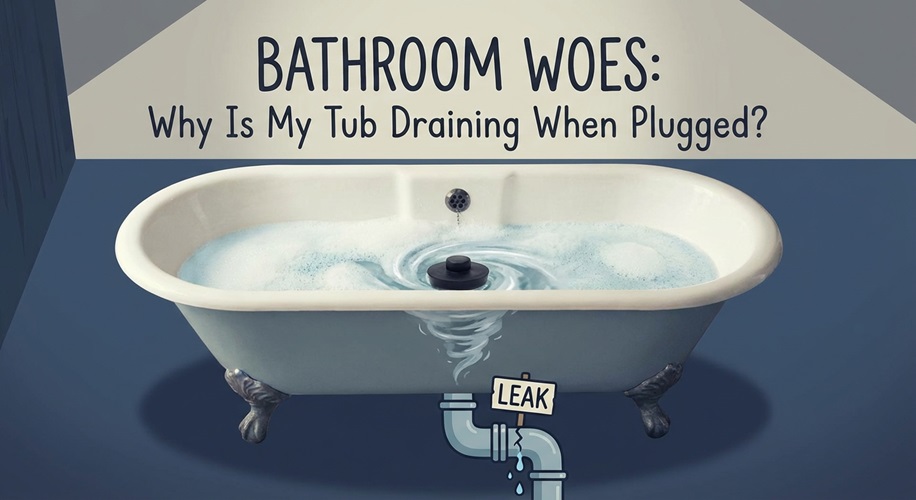
Your bathtub is draining even when plugged because of a damaged gasket, faulty drain stopper, clogged overflow drain, or water pressure issues. In most cases, the problem traces back to either a worn gasket or a malfunctioning stopper mechanism.
The good news? This is a common issue with straightforward fixes. Most homeowners can resolve it without calling a plumber. I’ve dealt with this problem multiple times, and replacing the gasket or adjusting the drain stopper usually solves it completely.
Let me walk you through identifying your specific issue and fixing it.
Signs Your Bathtub Has a Drainage Problem
The obvious issue is water disappearing when you’re trying to take a bath. But other symptoms often accompany this problem:
Gurgling or Bubbling Sounds
Strange noises during drainage indicate air pressure issues in your plumbing system. Your drain is struggling to maintain proper seal pressure.
Water Level Fluctuations
If the water level rises and falls during your bath, the stopper isn’t maintaining a consistent seal. This creates an unpredictable and uncomfortable bathing experience.
Backup Into Other Fixtures
Water from your bathtub appearing in your sink or toilet suggests a more serious drainage system issue beyond just the stopper.
Frequent Clogs
Recurring clogs often indicate debris buildup affecting stopper function or structural problems with the drain assembly.
Rapid Temperature Changes
When water drains faster than intended, cold water from the supply line mixes in more quickly, making your bath uncomfortable.
Recognizing these symptoms helps pinpoint whether you’re dealing with a simple stopper issue or something requiring deeper investigation.
Reasons Your Bathtub Drains When Plugged
Several factors cause bathtubs to drain despite being plugged. Understanding the root cause helps you choose the right fix.
Reason #1: Damaged or Worn Gasket
This is the most common culprit. The gasket—a rubber or silicone ring—creates a watertight seal when the stopper closes. Over time, gaskets:
- Crack from age and repeated use
- Become brittle from exposure to soaps and chemicals
- Warp or shrink, losing their sealing ability
- Develop calcium or mineral buildup preventing proper contact
A damaged gasket allows water to seep past even when the stopper appears fully closed.
Reason #2: Faulty Drain Stopper
The stopper mechanism itself may be the problem:
Worn Components: Internal parts degrade over time, preventing complete closure.
Improper Alignment: The stopper may sit crookedly, leaving gaps for water to escape.
Damaged Surface: Chips, cracks, or corrosion on the stopper prevent flush contact with the drain.
Broken Mechanism: The linkage connecting the stopper to the operating lever can break or disconnect.
Reason #3: Clogged Overflow Drain
Most bathtubs have an overflow drain below the faucet. If this secondary drain clogs with hair and debris, it creates:
- Altered pressure dynamics in the drain system
- Alternative pathways for water to escape
- Incomplete sealing even with a functioning stopper
Reason #4: Water Pressure Variations
Fluctuating water pressure affects stopper performance:
- High pressure can force water past the stopper seal
- Low pressure may prevent the stopper from seating properly
- Pressure surges can momentarily break the seal
Reason #5: Installation or Venting Issues
Plumbing system problems sometimes cause stopper failures:
- Blocked vents create improper pressure balance
- Poor original installation means components never sealed correctly
- Incompatible replacement parts don’t fit properly
How to Stop Your Bathtub from Draining When Plugged
Before attempting fixes, clean the drain area thoroughly. Remove visible hair, soap scum, and debris using tweezers, needle-nose pliers, or a drain cleaning tool. Sometimes a thorough cleaning is all you need.
Fix #1: Inspect and Adjust the Drain Stopper
Start with the most accessible component—the stopper itself.
Step 1: Remove the Stopper
Different stopper types require different removal methods:
| Stopper Type | How to Remove |
|---|---|
| Push-Pull | Pull straight up while twisting |
| Lift-and-Turn | Lift and rotate counterclockwise |
| Toe-Touch | Push down, then unscrew counterclockwise |
| Pop-Up | Remove overflow plate, pull out linkage and stopper |
| Trip-Lever | Remove overflow plate, pull out entire assembly |
Step 2: Examine the Stopper
Look for:
- Cracks or chips on the sealing surface
- Corrosion or mineral buildup
- Worn or missing rubber components
- Bent or damaged parts
Step 3: Clean Thoroughly
Use white vinegar or a mild bathroom cleaner to remove:
- Soap residue
- Mineral deposits
- Grime affecting seal contact
Step 4: Reinstall and Test
Place the stopper back and ensure proper alignment:
- Push-Pull Stoppers: Push down firmly until fully seated
- Lift-and-Turn Stoppers: Lower and rotate clockwise to close
- Toe-Touch Stoppers: Press down to engage the closed position
- Lever-Operated Stoppers: Move lever to the closed position
Fill the tub with a few inches of water and observe for five minutes. If water level drops, proceed to the next fix.
Fix #2: Replace the Gasket
If the stopper appears fine but still leaks, the gasket likely needs replacement.
Step 1: Remove the Stopper
Follow the removal steps above for your stopper type.
Step 2: Locate the Gasket
The gasket sits either:
- Around the base of the stopper
- Inside the drain opening
- On the underside of the stopper cap
Step 3: Remove the Old Gasket
Carefully peel away the old gasket. Use a flathead screwdriver if needed, but avoid scratching metal surfaces.
Step 4: Clean the Seating Surface
Remove all old gasket residue and buildup. The surface must be clean for the new gasket to seal properly.
Step 5: Install the New Gasket
- Purchase the correct replacement gasket (bring the old one to the hardware store if unsure)
- Press the new gasket firmly into position
- Ensure it sits evenly without gaps or bunching
Step 6: Reassemble and Test
Reinstall the stopper and test with water. The seal should now hold.
Fix #3: Clear the Overflow Drain
If stopper and gasket fixes don’t work, check the overflow drain.
Step 1: Locate the Overflow
Find the overflow opening—usually a circular plate below the faucet with one or two screws.
Step 2: Remove the Cover Plate
Unscrew and remove the plate carefully. For trip-lever systems, the stopper linkage attaches here.
Step 3: Clear Debris
Use a drain cleaning brush or flexible drain snake to remove hair and buildup from the overflow tube.
Step 4: Reassemble
Replace the cover plate and test drainage function.
Fix #4: Check for Pressure Issues
If simple fixes don’t resolve the problem:
- Test water pressure using a pressure gauge on an outdoor spigot (normal range: 40-60 PSI)
- Inspect visible plumbing vents for blockages
- Listen for gurgling in other fixtures when the bathtub drains
Pressure-related issues often require professional assessment.
When to Call a Plumber
Some situations require professional help:
- Stopper mechanism is broken internally and requires full replacement
- Drain assembly damage beyond simple stopper or gasket issues
- Persistent problems after trying all DIY fixes
- Water backing up into other fixtures
- Suspected venting issues affecting multiple drains
- Older homes with outdated plumbing configurations
A licensed plumber can diagnose hidden issues and ensure proper repairs.
Preventing Future Drainage Issues
Keep your bathtub drain functioning properly with these habits:
Use a Drain Cover
Install a mesh drain cover to catch hair and debris before they reach the stopper mechanism.
Clean Monthly
Remove the stopper once a month and clear any accumulated hair or soap buildup.
Avoid Harsh Chemicals
Strong drain cleaners can degrade rubber gaskets faster. Use enzyme-based cleaners instead.
Test Periodically
Fill the tub occasionally and verify it holds water. Catching small leaks early prevents bigger problems.
Replace Gaskets Proactively
Gaskets typically last 3-5 years. Replace them before complete failure rather than waiting for leaks.
Quick Troubleshooting Guide
| Symptom | Likely Cause | First Fix to Try |
|---|---|---|
| Slow steady leak | Worn gasket | Replace gasket |
| Stopper won’t stay down | Broken mechanism | Inspect and replace stopper |
| Gurgling sounds | Clogged overflow or vent | Clear overflow drain |
| Water level fluctuates | Pressure issues | Check for vent blockages |
| Visible gaps when closed | Misaligned stopper | Adjust or realign stopper |
Frequently Asked Questions
Why does my bathtub drain with the stopper closed?
The most common causes are a worn gasket that no longer seals properly or a damaged drain stopper that doesn’t close completely. Cleaning the drain area and inspecting these components usually reveals the problem.
How do I know if my bathtub gasket needs replacing?
Signs include visible cracks, brittleness, warping, or a flattened appearance. If the gasket feels hard rather than pliable, or if you see gaps when the stopper closes, replacement is needed.
Can I use petroleum jelly to seal a leaky bathtub stopper?
This provides only a temporary fix. Petroleum jelly may help the gasket seal short-term but degrades rubber over time. Replace worn gaskets rather than relying on lubricants.
How much does it cost to fix a bathtub stopper?
DIY fixes cost $5-20 for replacement gaskets or stoppers. Professional repairs typically run $75-200 depending on the problem complexity and your location.
Why does my pop-up drain stopper not seal?
Pop-up stoppers rely on a linkage system connecting to the overflow plate. The linkage may need adjustment, or the stopper itself may be worn. Remove the overflow plate to access and adjust the mechanism.
Wrap Up
A bathtub that drains when plugged is frustrating but usually fixable without professional help. Start with the simplest solutions—cleaning the drain, checking the stopper, and replacing the gasket—before assuming major repairs are needed.
Most cases resolve with a new gasket or properly adjusted stopper. These fixes take fifteen minutes and cost under twenty dollars.
If DIY attempts don’t solve the problem, call a plumber to inspect for deeper issues. But chances are good you’ll have this fixed before your next bath.
Good luck!