
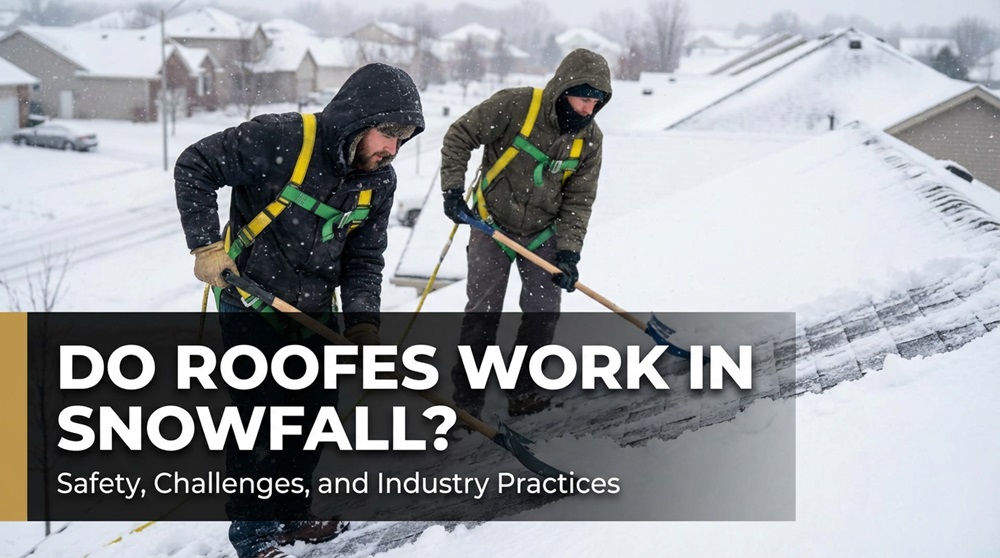
Yes, professional roofers absolutely work during snowfall. But they don’t just show up and start hammering away like it’s a sunny July afternoon.
Winter roofing requires:
→ Specialized cold-weather gear
→ Ice and snow removal techniques
→ Modified installation methods
→ Extra safety precautions
→ Temperature-appropriate materials
Most roofing work happens successfully when temperatures stay above 40°F. Below that? Things get trickier—but experienced crews know how to adapt.
Why Would Anyone Roof in Winter?
Good question. Here’s why it actually makes sense for many homeowners:
💰 Cost Savings
Roofing companies slow down in winter. Less demand means better pricing—often 10-20% below peak season rates.
📅 Faster Scheduling
No three-week wait for an estimate. Contractors have openings and can start sooner.
👀 More Attention
Fewer simultaneous projects means your contractor focuses more on your roof.
🛠️ Preventing Spring Disasters
Fixing problems now prevents major water damage when snow melts.
⏰ Extended Project Time
Contractors aren’t rushing to the next job, so they can take extra care.
Summer Roofing vs. Winter Roofing
Here’s a side-by-side look at what changes between seasons:
| Summer | Winter | |
|---|---|---|
| Pricing | Peak rates | 10-20% discounts common |
| Wait Time | Weeks to months | Days to weeks |
| Daily Work Hours | 10-12 hours possible | 6-8 hours typical |
| Weather Delays | Rain interruptions | Snow and ice delays |
| Material Behavior | Optimal flexibility | Requires warming/handling care |
| Worker Comfort | Heat exhaustion risk | Frostbite and hypothermia risk |
| Project Duration | Standard timeline | 20-40% longer |
Neither season is perfect. But winter offers real advantages if you understand the tradeoffs.
The Real Challenges of Roofing in Snow
Let’s get honest about what makes winter roofing difficult.
❄️ Challenge #1: Ice Dams
What’s happening:
Heat escapes through your roof, melting snow from underneath. That water runs down to the cold edges, refreezes, and creates a dam. Water backs up behind it and leaks into your home.
Why it matters for roofing:
Roofers can’t work on a roof covered in ice ridges. They have to remove dams first—adding time and labor.
How professionals handle it:
✓ Steam systems — Melts ice without damaging shingles (the gold standard)
✓ Calcium chloride — Placed in socks along the dam to create drainage channels
✓ Warm water application — Low pressure only, never boiling or high-pressure
✓ Plastic shovels and specialized rakes — Manual removal without gouging
What they never do:
✗ Metal tools that scrape shingles
✗ Rock salt (destroys metal and plants)
✗ Blowtorches or open flames
✗ High-pressure water forcing moisture underneath
❄️ Challenge #2: Snow Keeps Piling Up
What’s happening:
You clear the work area. An hour later, it’s covered again. Meanwhile, snow hides roof edges, skylights, and other hazards.
Why it matters:
Roofers can’t see what they’re working on or where dangers lurk.
How professionals handle it:
✓ Systematic clearing before and during work
✓ Roof rakes with long extensions
✓ Portable snow blowers for commercial jobs
✓ Snow fencing to mark edges and hazards
✓ Heated tarps over active work zones
❄️ Challenge #3: Freezing Temperatures
What’s happening:
Cold doesn’t just make workers uncomfortable—it fundamentally changes how materials behave.
Asphalt shingles get brittle and crack. Adhesive strips won’t seal. Sealants won’t cure. Batteries die faster. Workers lose feeling in their fingers.
How professionals handle it:
For materials:
✓ Store everything in heated spaces until needed
✓ Hand-seal shingles that won’t self-adhere
✓ Use winter-formulated sealants (rated to 0°F or below)
✓ Choose cold-tolerant materials when possible (metal performs great)
For workers:
✓ Rotate crews to limit cold exposure
✓ Mandatory heated break areas
✓ Thermal layered clothing systems
✓ Insulated gloves that maintain dexterity
✓ Chemical hand and toe warmers
❄️ Challenge #4: Everything Is Slippery
What’s happening:
Snow-covered roofs are slick. Ice-covered roofs are worse. Even cleared roofs stay slippery from residual moisture.
Falls are the leading cause of death in construction. Winter multiplies that risk dramatically.
How professionals handle it:
✓ Spiked winter boots with aggressive cold-weather treads
✓ Crampon attachments for severe ice
✓ More anchor points with shorter tie-off distances
✓ Walk boards and roof brackets creating stable platforms
✓ Buddy systems where workers monitor each other
✓ Mandatory 100% tie-off policies regardless of roof pitch
Temperature Rules Every Homeowner Should Know
Not all roofing materials handle cold equally. Here’s your quick reference:
| Material | Minimum Temp | What You Should Know |
|---|---|---|
| Asphalt Shingles | 40°F (4°C) | Won’t self-seal below 70°F—requires hand sealing |
| Metal Roofing | No minimum | Most winter-friendly option by far |
| TPO Membrane | 40°F (4°C) | Seam welding affected by cold |
| EPDM Rubber | 40°F (4°C) | Adhesives need warmth to work |
| Modified Bitumen | 25°F (-4°C) | Torch-applied works in colder temps |
| Slate or Tile | No minimum | Handle carefully—more brittle when cold |
The bottom line: If you’re getting asphalt shingles installed, push for a day above 40°F. If that’s not possible, make sure your contractor hand-seals every tab.
What About Wind Chill?
Here’s something most people don’t consider: the thermometer doesn’t tell the whole story.
A 30°F day with 20 mph winds feels like 17°F on exposed skin. That’s the difference between “uncomfortable” and “dangerous.”
Wind chill reality check:
| Actual Temp | 10 mph Wind | 20 mph Wind |
|---|---|---|
| 40°F | 34°F | 30°F |
| 30°F | 21°F | 17°F |
| 20°F | 9°F | 4°F |
Smart contractors set wind chill limits—usually around 20°F—and stop work when conditions exceed them.
The Winter Roofing Gear List
Professional winter roofing requires serious equipment investment. Here’s what quality contractors bring:
Personal Protection:
- Moisture-wicking base layers
- Insulating mid-layers
- Windproof, waterproof shells
- Thermal face protection
- Insulated gloves with grip
- Chemical warmers
Fall Protection:
- Cold-rated harness systems
- Stainless steel anchors (won’t freeze shut)
- Self-retracting lifelines designed for winter
- High-visibility gear for overcast days
Ice Management:
- Professional steam systems
- Calcium chloride applicators
- Telescoping roof rakes
- Plastic snow shovels
- Portable heating equipment
Cold-Weather Tools:
- Battery warmers
- Propane heaters for material warming
- Insulated storage containers
- Low-temp sealant guns
Regional Differences: Winter Roofing Across America
Winter doesn’t look the same everywhere. Here’s what matters in different regions:
🏔️ Northern States (Minnesota, Wisconsin, Michigan, Maine)
- Long winters: November through April
- Heavy snow loads requiring structural awareness
- Extreme cold limiting work windows significantly
- Contractors well-equipped and experienced
⛰️ Mountain West (Colorado, Utah, Montana)
- Intense but intermittent snowfall
- Wild temperature swings (50°F variation in one day)
- Dry, powdery snow easier to manage
- High altitude affects worker stamina
🌊 Great Lakes Region (Ohio, New York, Pennsylvania)
- Lake effect snow creates unpredictable local conditions
- Heavy, wet snow increases load concerns
- Frequent freeze-thaw cycles
- More work windows than extreme north
🌲 Pacific Northwest (Washington, Oregon)
- Rain-snow mix more common than pure snow
- Milder temperatures extend the working season
- Moss and moisture issues compound in winter
- More available work days despite precipitation
🏛️ Northeast (Massachusetts, New Jersey, Connecticut)
- Nor’easters bring heavy, wet snow
- Coastal salt spray affects material choices
- Variable conditions require flexible scheduling
- Ice storms particularly hazardous
What Winter Roofing Actually Costs
Let’s talk money.
Where You Save:
- Material discounts: 10-20% off peak pricing
- Labor availability: Competitive rates from contractors wanting work
- Manufacturer promotions: Off-season incentives
Where You Pay More:
- Extended labor time: 20-40% longer projects
- Snow and ice removal: Pre-work preparation
- Weather delays: Potential multi-day pauses
- Specialized equipment: Cold-weather gear costs
The Net Result:
For most projects, winter and summer costs balance out—or winter comes in 5-10% cheaper. Emergency winter repairs, however, cost 25-50% more due to urgency.
Stopping Ice Dams Permanently
Tired of dealing with ice dams every winter? Here’s how to fix the root cause:
The Problem:
Ice dams happen because warm air escapes through your roof, melting snow from below.
The Solutions:
1. Improve Attic Insulation
- Aim for R-38 to R-60 in cold climates
- Seal every air leak around fixtures, pipes, and ducts
- Ensure even coverage without gaps
2. Enhance Attic Ventilation
- Balance intake (soffit vents) with exhaust (ridge vents)
- Target 1 square foot of ventilation per 150 square feet of attic
- Install baffles so insulation doesn’t block airflow
3. Install Heat Cables
- Zigzag cables along eaves and in gutters
- Self-regulating types adjust to temperature automatically
- Expect $1-3 per linear foot monthly operating cost
4. Add Ice and Water Shield
- Self-adhering membrane under shingles at eaves
- Extends at least 24 inches past exterior walls
- Required by code in cold climates
- Catches any water that does get through
When Roofers Should NOT Work
Even the best contractors need to know when to quit. Here’s when work should stop:
🛑 Absolute Stop Conditions:
- Heavy snowfall limiting visibility
- Active ice storms
- Temperatures below established minimums
- Sustained winds over 25 mph
- Any lightning activity
- Blizzard or winter storm warnings
⚠️ Proceed With Caution:
- Light snow during non-critical phases
- Temperatures near minimums
- Forecast improvement expected soon
- Materials needing extra warming time
Never Rush It
Pushing through bad conditions leads to:
- Improperly installed materials that fail early
- Increased accident risk
- Hidden damage from trapped moisture
- Warranty problems
- Expensive callbacks
How to Choose a Winter Roofing Contractor
Winter amplifies the difference between good and bad contractors. Here’s how to find the right one:
Must-Have Qualifications:
☑️ Valid state contractor’s license
☑️ Workers’ compensation insurance (verify it)
☑️ General liability insurance ($1M minimum)
☑️ Documented winter roofing experience
☑️ Manufacturer certifications
☑️ Cold-weather safety training
Questions to Ask:
- “What’s your minimum working temperature?”
- “How do you remove ice before starting work?”
- “What cold-weather modifications do you use for installation?”
- “How do you store and warm materials?”
- “What happens if weather delays us?”
- “How does your warranty handle winter installation?”
Red Flags:
🚩 No clear cold-weather protocols
🚩 Pressure to work despite dangerous conditions
🚩 No mention of material temperature management
🚩 Significantly lower prices than everyone else
🚩 Unwilling to discuss weather contingencies
🚩 No physical address or references
Common Questions About Winter Roofing
What temperature is too cold for roofing?
Below 40°F, asphalt shingles become brittle and may crack. Adhesive strips won’t seal until temperatures reach 70°F, requiring manual sealing. Metal roofing works at any temperature with careful handling. Most contractors stop work when wind chill drops below 20°F due to safety concerns.
Can you replace an entire roof in winter?
Absolutely—with proper planning. Contractors target milder weather windows, modify installation techniques, and manage material temperatures carefully. Expect projects to take 20-40% longer than summer. Metal roofing installs easiest in cold; asphalt requires more precautions.
How do professionals remove ice dams safely?
Steam systems are the safest method, melting ice without damaging shingles. Calcium chloride in tube socks creates drainage channels. Warm (not hot) water helps when applied at low pressure. Professionals never use metal tools, rock salt, or open flames—all damage roofing materials.
What roof handles heavy snow best?
Steep pitches (6:12 slope or greater) shed snow naturally. Metal surfaces let snow slide off better than textured shingles. Slate offers exceptional durability for heavy loads. For flat roofs, structural reinforcement handling 30-50 pounds per square foot is essential.
What’s the most affordable roof for snowy areas?
Architectural asphalt shingles offer the best balance of cost and cold-weather performance at $3.50-$5.50 per square foot installed. Metal costs more upfront but lasts 40-70 years with minimal maintenance—often proving cheaper over time in harsh climates.
How much snow is too much for my roof?
Most residential roofs support 20-30 pounds per square foot. Fresh powder weighs 3-5 pounds per cubic foot; wet snow can hit 20+ pounds. Ice weighs about 57 pounds per cubic foot. Warning signs: unusual creaking, visible sagging, doors that suddenly stick.
Should I clear snow from my roof?
Remove snow when it exceeds 12-18 inches, especially if it’s heavy and wet. Use roof rakes from the ground—climbing onto snowy roofs is extremely dangerous. Focus on eaves first to prevent ice dams. Call professionals for steep, tall, or complex roofs.
Does insurance cover winter roof repairs?
Most homeowner’s policies cover sudden storm damage regardless of season. Document everything with photos before temporary repairs. Ice dam damage may fall under different categories—check your policy. Regular maintenance (clearing gutters, removing snow) remains your responsibility.
Preparing Your Home for Winter Roofing
Here’s how to set things up for success:
Before Work Starts:
- Clear driveways and pathways for access
- Move vehicles away from work zones
- Protect landscaping from falling debris
- Ensure attic access is available
- Discuss material storage locations
- Exchange emergency contact information
During the Project:
- Keep interior heat running to prevent freezing
- Expect some temperature fluctuation
- Keep kids and pets away from work areas
- Monitor weather together with your contractor
- Raise concerns immediately
- Document progress with photos
After Completion:
- Inspect during the next thaw
- Confirm proper sealing once it warms up
- Schedule a spring follow-up inspection
- Keep all warranty documents
- Watch for leak signs during snowmelt
- Clear gutters of any installation debris
The Bottom Line
Winter roofing works. Thousands of projects complete successfully every cold season across the country.
The keys to success:
For Homeowners:
→ Choose contractors with proven winter experience
→ Understand temperature limitations
→ Don’t pressure anyone to work in dangerous conditions
→ Consider ice dam prevention as a long-term investment
→ Take advantage of off-season pricing—but not at the expense of quality
For Contractors:
→ Invest in proper cold-weather gear and training
→ Set clear temperature and condition thresholds
→ Communicate weather plans to clients upfront
→ Adapt techniques for cold material behavior
→ Put worker safety above schedule pressure—always
Winter adds complexity, but preparation and professionalism deliver excellent results. Whether you’re handling storm damage or grabbing off-season discounts, understanding the process ensures your project succeeds.