
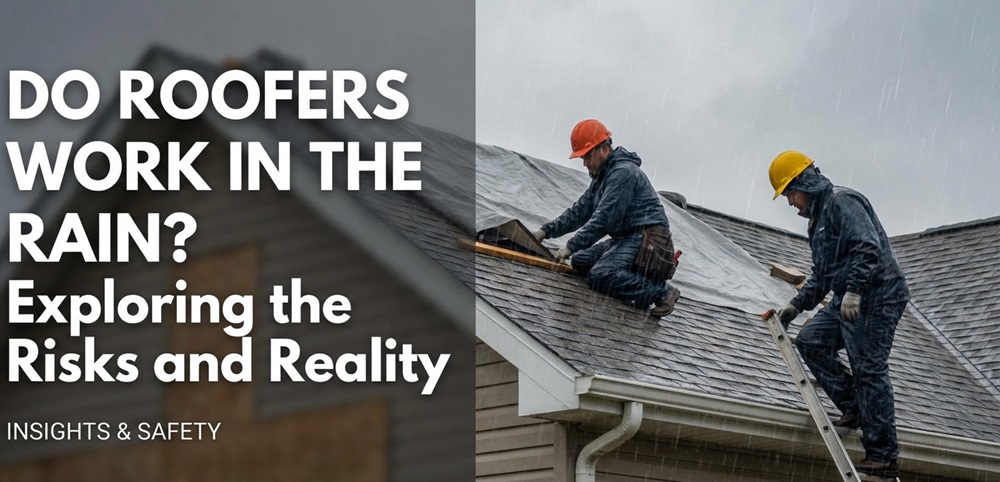
Professional roofers can perform emergency repairs and certain tasks in light rain using specialized safety equipment, weather-resistant materials, and modified techniques. However, full roof installations and adhesive-dependent work require dry conditions for proper execution and material bonding.
Understanding how contractors safely navigate wet-weather roofing helps you evaluate whether your situation requires immediate action or can wait for better conditions.
Can Roofers Work in the Rain?
Yes, experienced roofers work in rainy conditions when necessary—but with significant limitations and precautions.
Work typically performed in light rain:
- Emergency leak repairs
- Temporary tarp installations
- Securing loose or blown-off shingles
- Gutter clearing and drainage restoration
- Damage assessments and inspections
Work requiring dry conditions:
- Complete roof replacements
- Underlayment and membrane installation
- Adhesive or sealant application
- New construction roofing
- Structural repairs
Professional contractors assess multiple factors before proceeding: rain intensity, wind speed, temperature, roof pitch, and specific task requirements. Safety always takes priority over speed.
Roofing Conditions: Clear Weather vs. Rainy Weather
Wet conditions fundamentally change every aspect of roofing work. Understanding these differences helps homeowners set realistic expectations.
| Factor | Clear Conditions | Rainy Conditions |
|---|---|---|
| Surface Traction | Normal grip levels | 60-80% reduced traction |
| Work Speed | Standard pace | 40-50% slower |
| Fall Risk | Baseline risk | 3-4x higher risk |
| Material Bonding | Optimal adhesion | Compromised or impossible |
| Visibility | Full visibility | Significantly impaired |
| Equipment Function | All tools operational | Some tools unusable |
| Worker Fatigue | Normal levels | Accelerated fatigue |
Regional Considerations:
Rain characteristics vary significantly by location. Pacific Northwest drizzle differs from Gulf Coast downpours. Florida’s afternoon thunderstorms require different planning than Seattle’s steady rain. Local contractors understand regional weather patterns and adjust protocols accordingly.
How Professional Roofers Safely Work in Rain
Qualified contractors follow established protocols to maintain safety and work quality during wet conditions.
Challenge #1: Slippery Roof Surfaces
The Problem:
Wet roofing materials—asphalt shingles, metal panels, tile, flat membranes—lose significant traction. According to OSHA, falls remain the leading cause of death in construction, with wet conditions substantially increasing risk.
Professional Solutions:
- Cougar Paw or similar specialized roofing boots with wet-rated rubber compounds providing superior grip
- Roof brackets and walk boards creating stable work platforms
- Additional anchor points reducing fall distances to under 6 feet
- Slower, deliberate movement patterns preventing momentum-based slips
- Knee pads with grip surfaces for low-slope work
Challenge #2: Compromised Material Performance
The Problem:
Many roofing materials fail to perform correctly when wet:
- Asphalt adhesive strips won’t seal
- Roofing cement doesn’t bond
- Underlayment can trap moisture
- Wood decking absorbs water, causing future problems
Professional Solutions:
- Synthetic underlayments designed for wet application
- Mechanical fasteners instead of adhesive-dependent products
- Peel-and-stick membranes rated for damp surface application
- Butyl-based sealants formulated for wet conditions
- Metal flashing that doesn’t require adhesive bonding
Challenge #3: Reduced Visibility and Concentration
The Problem:
Rain obscures vision, distracts attention, and makes precision work difficult. Workers compensating for reduced visibility may miss hazards or make installation errors.
Professional Solutions:
- Safety glasses with anti-fog and water-shedding coatings
- Hooded rain gear channeling water away from face
- LED work lighting compensating for overcast conditions
- Two-person verification systems for critical installations
- Frequent quality checks during and after work
Challenge #4: Equipment and Tool Limitations
The Problem:
Certain tools and equipment cannot operate safely in wet conditions:
- Electric power tools risk shock hazards
- Torch-applied materials become dangerous
- Pneumatic tools may malfunction
- Measurement tools give inaccurate readings
Professional Solutions:
- Battery-powered tools with water-resistant ratings
- Manual alternatives for critical tasks
- Covered work stations for equipment requiring protection
- Waterproof tool bags preventing moisture damage
- Generator placement in protected, elevated locations
Essential Safety Equipment for Rainy-Day Roofing
Professional contractors invest in specialized gear for wet-weather operations:
Personal Protective Equipment (PPE)
- Full-body harness systems meeting ANSI Z359.11 standards
- Self-retracting lifelines (SRLs) with corrosion-resistant components
- Slip-resistant roofing boots with 4+ grip rating
- Waterproof, breathable rain suits maintaining mobility
- High-visibility colors for overcast condition visibility
- Insulated gloves maintaining dexterity when wet
Fall Protection Systems
- Roof anchors rated for wet conditions (stainless steel preferred)
- Rope grabs and vertical lifelines with wet-rated cams
- Guardrail systems for extended work areas
- Safety netting for larger commercial projects
- Warning line systems marking roof edges
Weather Protection
- Heavy-duty tarps (minimum 10 mil thickness) for covering work areas
- Pop-up canopy shelters creating dry zones
- Weighted tarp anchors (never puncture membranes)
- Portable pumps for standing water removal
- Squeegees and blowers for surface water displacement
When Roofers Should NOT Work in Rain
Certain conditions make roofing work too dangerous regardless of equipment or experience:
Absolute Stop-Work Conditions
- Lightning within 10 miles — elevated metal objects attract strikes
- Sustained winds exceeding 25 mph — balance and material control compromised
- Heavy rainfall reducing visibility below 50 feet
- Freezing rain or ice accumulation — no safe traction possible
- Hail of any size — injury risk and material damage
- Tornado watches or warnings
Conditional Stop-Work Situations
- Steady moderate rain — most installation work should pause
- Intermittent heavy showers — work between cells if possible
- Temperature below 40°F with rain — adhesive failure and hypothermia risk
- Saturated decking — must dry before membrane installation
- Flooded roof areas — drainage issues require resolution first
Emergency Roof Repairs in Rain: What’s Possible
When leaks occur during storms, homeowners need immediate solutions. Here’s what qualified emergency roofers can accomplish:
Immediate Actions (During Active Rain)
- Interior water management — buckets, tarps, drainage paths
- Tarp installation over damaged areas from inside attic if accessible
- Temporary exterior tarping during rain breaks
- Gutter and downspout clearing restoring drainage
- Emergency sealing of obvious penetrations
Short-Term Repairs (Light Rain or Breaks)
- Securing loose shingles with roofing nails
- Applying emergency patches to visible holes
- Replacing missing vent caps or pipe boots
- Sealing exposed nail heads
- Installing temporary flashing
Permanent Repairs (Dry Conditions Required)
- Full shingle replacement sections
- Underlayment repair or replacement
- Flashing integration
- Valley repairs
- Any work requiring adhesive bonding
Cost Considerations: Rainy-Day Roofing
Weather conditions affect roofing costs significantly:
Emergency Service Premiums
- After-hours calls: 25-50% premium
- Storm-season demand: 15-30% increase
- Immediate response: 30-75% above standard rates
- Holiday or weekend: 50-100% premium
Weather-Related Cost Factors
- Extended labor time: Wet conditions slow work 40-50%
- Specialized materials: Weather-resistant products cost 10-20% more
- Additional equipment: Tarps, pumps, extra safety gear
- Return trips: If work must pause and resume
- Expedited material delivery: Premium shipping for urgent repairs
Cost-Saving Strategies
- Schedule non-emergency work during dry seasons
- Maintain roof regularly to prevent emergency situations
- Address minor issues before they become major leaks
- Get multiple estimates when time permits
- Ask about weather-related guarantees
How to Evaluate a Roofer for Wet-Weather Work
Before hiring a contractor for rainy-season repairs, verify these qualifications:
Essential Credentials
- ✅ Valid state contractor’s license (verify online)
- ✅ Workers’ compensation insurance (request certificate)
- ✅ General liability insurance (minimum $1 million)
- ✅ Manufacturer certifications for materials used
- ✅ OSHA 10 or 30 training for crew members
Wet-Weather Capability Questions
- “What safety equipment do your crews use in rain?”
- “How do you protect my home during wet-weather work?”
- “Which materials do you use for emergency wet repairs?”
- “What’s your policy if conditions become unsafe?”
- “How do you ensure quality when working in rain?”
- “What warranty covers wet-weather repair work?”
Red Flags to Avoid
- ❌ Pressure to proceed despite dangerous conditions
- ❌ No clear safety equipment or protocols
- ❌ Unwillingness to provide insurance certificates
- ❌ Cash-only payments with no written contract
- ❌ Promises that seem unrealistic for conditions
- ❌ No physical business address or online presence
Regional Rain Considerations for Roofing
Weather patterns affect roofing decisions differently across regions:
Pacific Northwest (Seattle, Portland, Vancouver)
- Extended rainy seasons October-May
- Light, steady rain common—contractors adapt schedules
- Brief dry windows for installation work
- Moss and moisture prevention critical
Gulf Coast (Houston, New Orleans, Tampa)
- Intense afternoon thunderstorms year-round
- Hurricane season June-November requires preparation
- High humidity affects material curing
- Flash flooding impacts access
Northeast (Boston, New York, Philadelphia)
- Nor’easters bring heavy, sustained rain
- Freeze-thaw cycles complicate scheduling
- Snow-rain transitions create ice hazards
- Shorter daylight in winter limits windows
Southwest (Phoenix, Las Vegas, Denver)
- Monsoon season July-September
- Flash storms intense but brief
- Generally favorable roofing climate
- Extreme heat affects some materials more than rain
Frequently Asked Questions
Can heavy rain damage my roof?
Yes, heavy rain causes and reveals roof damage through multiple mechanisms. Sustained heavy rainfall tests every seal, flashing joint, and shingle bond. Wind-driven rain penetrates areas normal rain wouldn’t reach. Accumulated water weight stresses structural components. Even well-maintained roofs eventually develop vulnerabilities from repeated heavy rain exposure, making regular inspections essential.
What happens if rain starts during roof installation?
Professional contractors immediately stop work and protect exposed areas. Crews deploy tarps over open sections, secure loose materials, and ensure no water enters your home. Quality contractors monitor weather forecasts closely and avoid starting work when significant rain threatens. Responsible companies will reschedule rather than risk trapping moisture beneath new roofing materials.
How long must a roof dry before installation resumes?
Roof surfaces typically require 24-48 hours of dry conditions before installation work resumes. Critical factors include sunlight exposure, temperature, humidity, wind conditions, and roof pitch. Steeper roofs dry faster due to improved drainage. Flat roofs may require 48-72 hours. Most importantly, wood decking must reach acceptable moisture content (typically below 19%) before covering with underlayment.
Is it safe for roofers to work in light rain?
Experienced professionals with proper safety equipment can perform certain tasks in light rain. This includes temporary repairs, tarp installations, inspections, and mechanical fastening. However, even light rain increases fall risk and limits which tasks are appropriate. Professional contractors make judgment calls balancing urgency against safety for each specific situation.
Will my homeowner’s insurance cover emergency rain repairs?
Most homeowner’s policies cover sudden storm damage, including emergency repairs to prevent further damage. Document all damage with photos and videos before temporary repairs. Keep receipts for tarps, emergency service calls, and repairs. Contact your insurance company promptly to report damage. Coverage specifics vary by policy—review your coverage or contact your agent for clarification.
How can I temporarily stop a roof leak during rain?
For minor leaks during active rain:
- Place buckets or containers to catch water
- Use towels to absorb spreading water
- If attic is accessible, apply roofing cement to visible penetrations
- Spread plastic sheeting over affected ceiling areas
- Create drainage paths away from valuables
- Call a professional for proper repair once conditions allow
What roofing materials work best in rainy climates?
Climate-appropriate materials for high-rainfall areas include:
- Metal roofing — excellent water shedding, no absorption
- Synthetic underlayments — won’t trap moisture like felt
- Architectural shingles — better water channeling than 3-tab
- Proper flashing — copper or stainless steel for longevity
- Ice and water shield — self-sealing protection in critical areas
Protecting Your Home Before Roofers Arrive
Take these steps while waiting for professional help:
Immediate Interior Protection
- Move furniture and valuables away from leak areas
- Place plastic sheeting over items that cannot be moved
- Set up containers to catch dripping water
- Create drainage paths toward floor drains if available
- Turn off electricity to affected areas if water is near fixtures
Attic Access Steps (If Safe)
- Locate leak source from inside if possible
- Apply emergency patching material to obvious holes
- Place buckets or containers under active drips
- Do not walk on wet insulation
- Document damage with photos for insurance
Exterior Precautions
- Clear gutters and downspouts of debris
- Ensure downspout extensions direct water away from foundation
- Note visible damage locations for contractor
- Do not climb onto wet roof—leave this to professionals
- Secure loose items that could blow onto roof
Conclusion
Professional roofers successfully work in rainy conditions using specialized equipment, weather-appropriate materials, and strict safety protocols. Understanding their methods helps you evaluate contractors and set realistic expectations for wet-weather repairs.