
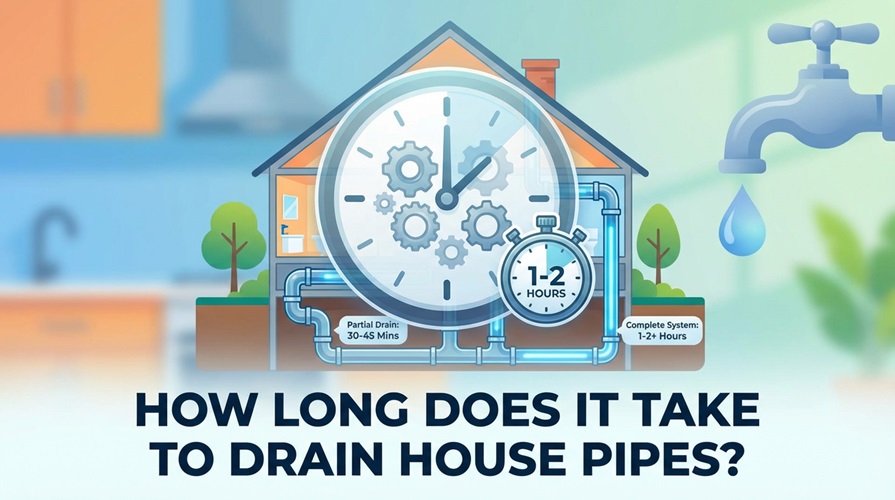
Draining a kitchen sink typically takes under two minutes. Bathtubs need five to ten minutes. If you’re winterizing your home or performing maintenance that requires draining the entire plumbing system, a single-story home takes twenty to thirty minutes while multi-story homes may need forty-five minutes to an hour.
I’ll break down exactly what affects these times and how to drain your pipes efficiently.
Factors Affecting Drainage Time of House Pipes
Several factors determine how quickly your house pipes drain. Understanding these helps you estimate realistic timeframes and identify potential problems.
Factor #1: Pipe Size and Layout
Your plumbing system consists of interconnected pipes with varying diameters. Larger pipes—like main sewer lines—allow water to flow faster than smaller branch pipes leading to individual fixtures.
Main drainage lines typically measure 3-4 inches in diameter, while sink drain pipes range from 1.25-2 inches. This size difference explains why main lines clear faster despite handling more water volume.
The layout matters too. Homes with complex plumbing configurations featuring multiple turns and connections drain slower than straightforward layouts.
Factor #2: Water Volume
The amount of water in your system directly impacts drainage time. Draining a single bathroom sink takes seconds. Draining your entire home—including water heater, supply lines, and all fixtures—takes significantly longer.
Water heaters alone hold 40-80 gallons depending on your unit size. This single component can add fifteen to twenty minutes to your total drainage time.
Factor #3: Water Flow Rate and Pipe Slope
Properly sloped pipes drain faster than level ones. Plumbing codes typically require a quarter-inch slope per foot of horizontal pipe run. Pipes installed at correct angles allow gravity to work efficiently.
Older homes sometimes have settling issues that reduce pipe slope over time, slowing drainage rates noticeably.
Factor #4: Venting System Function
Your plumbing vents allow air into the system, enabling water to flow freely. Blocked or inadequate venting creates vacuum pressure that slows drainage significantly—sometimes making a two-minute drain take ten minutes or longer.
Estimated Drainage Times for Different House Pipes
Here are realistic drainage times for common household fixtures and systems:
Individual Fixtures
Kitchen Sink: Standard kitchen sinks drain in 30 seconds to 2 minutes. Double-basin sinks take slightly longer if draining both sides simultaneously.
Bathroom Sink: Smaller basin size means faster drainage—typically 30 seconds to 1 minute.
Bathtub: Depending on water depth, bathtubs take 5-10 minutes to drain completely. Soaking tubs with larger capacities may need 12-15 minutes.
Shower: Standard showers drain in 2-4 minutes after you turn off the water.
Toilet: The flush and tank refill cycle completes in 1-3 minutes. The bowl itself drains in seconds.
Washing Machine: Drain cycles run 2-3 minutes per cycle.
Complete System Drainage
| Home Type | Estimated Drainage Time |
|---|---|
| Single-story (1-2 bathrooms) | 20-30 minutes |
| Two-story (2-3 bathrooms) | 30-45 minutes |
| Large home (3+ bathrooms) | 45-60 minutes |
| Home with multiple water heaters | Add 15-20 minutes per unit |
Quick Reference Table
| Fixture/System | Drainage Time |
|---|---|
| Bathroom sink | 30 seconds – 1 minute |
| Kitchen sink | 30 seconds – 2 minutes |
| Shower | 2-4 minutes |
| Bathtub | 5-10 minutes |
| Toilet (flush cycle) | 1-3 minutes |
| Water heater (40-50 gallon) | 15-20 minutes |
| Water heater (80 gallon) | 25-35 minutes |
| Entire home system | 20-60 minutes |
How Do You Completely Drain Water Pipes?
Completely draining your home’s water pipes is essential for winterization, repairs, or extended vacancies. Here’s the step-by-step process:
Tools Needed
- Adjustable wrench or pliers
- Garden hose
- Buckets or containers
- Towels
Step-by-Step Draining Process
Step 1: Locate and close the main water shut-off valve. This valve is typically near where the water line enters your home—often in the basement, crawl space, or utility area.
Step 2: Turn off your water heater. For gas units, set the control to “pilot” or turn off the gas supply. For electric units, switch off the circuit breaker.
Step 3: Open all faucets throughout your home. Include hot and cold taps on every sink, bathtub, and shower. Don’t forget outdoor spigots.
Step 4: Flush all toilets to empty tanks and bowls.
Step 5: Locate the lowest drain point in your home—usually a basement faucet, water heater drain valve, or main drain valve. Attach a hose if needed and open to release remaining water.
Step 6: Open the water heater drain valve. Allow the tank to empty completely—this takes fifteen to thirty minutes depending on tank size.
Step 7: Check all open faucets. When water stops flowing and only air sputters out, the system is drained.
Step 8: For complete winterization, add RV antifreeze to drain traps in sinks, tubs, showers, and toilets to prevent remaining water from freezing.
Common Problems That Slow Pipe Drainage
Several issues can extend drainage times beyond normal ranges. Recognizing these problems helps you address them efficiently.
Issue #1: Clogs and Blockages
Hair, soap residue, food particles, and grease accumulate over time, creating partial or complete blockages. A sink that normally drains in thirty seconds might take five minutes or longer when partially clogged.
Solutions:
- Use drain screens to catch debris
- Try a plunger for minor clogs
- Use a drain snake for deeper blockages
- Apply baking soda and vinegar for organic buildup
- Call a plumber for persistent clogs
Issue #2: Mineral Deposit Buildup
Hard water areas experience calcium and mineral deposits inside pipes. These deposits narrow the pipe diameter, restricting water flow and extending drainage times.
Solutions:
- Periodic vinegar treatments help dissolve minor deposits
- Professional descaling for severe buildup
- Consider a water softener system for prevention
Issue #3: Venting Problems
Blocked or inadequate plumbing vents create air pressure issues. Signs include gurgling sounds, slow drainage across multiple fixtures, and sewer odors.
Solutions:
- Clear debris from roof vent openings
- Check for bird nests or leaves blocking vents
- Contact a plumber for internal vent blockages
Issue #4: Aging Plumbing Systems
Older pipes—especially galvanized steel—corrode internally, reducing diameter and flow capacity. Homes with original plumbing from before 1980 often experience noticeably slower drainage.
Solutions:
- Pipe inspection to assess condition
- Partial or complete repiping for severely degraded systems
- Regular maintenance to extend remaining lifespan
Issue #5: Improper Pipe Slope
Pipes that have settled or were incorrectly installed lack adequate slope for efficient drainage. Water pools in low spots instead of flowing toward drains.
Solutions:
- Professional assessment of pipe angles
- Pipe repositioning or replacement where needed
Tips for Efficient House Pipe Drainage
Maintain optimal drainage performance with these practical habits:
Use Drain Screens: Install strainers in all sinks and showers to catch hair, food particles, and debris before they enter pipes.
Flush Drains Regularly: Periodically fill sinks and tubs completely, then release the water. This high-volume flush helps clear minor buildup.
Avoid Grease Disposal: Never pour cooking oils or grease down drains. They solidify in pipes and create stubborn blockages.
Limit Toilet Paper Volume: Use reasonable amounts per flush to prevent clogs.
Run Water During Disposal Use: Always run cold water before, during, and after using garbage disposals to flush particles through the system.
Monthly Maintenance: Pour boiling water down drains monthly to dissolve soap residue and minor grease accumulation.
Annual Professional Inspection: Consider yearly drain inspection, especially for older homes, to identify developing issues before they cause major problems.
When Drainage Takes Too Long: Warning Signs
Normal drainage times are predictable. When they extend significantly, pay attention:
- Sink taking over 3 minutes: Likely partial clog forming
- Bathtub taking over 15 minutes: Check drain stopper mechanism and look for hair accumulation
- Multiple slow drains simultaneously: Indicates main line issue or venting problem
- Gurgling sounds during drainage: Venting system needs inspection
- Water backing up into other fixtures: Main sewer line may be blocked
Address slow drainage promptly. Minor issues become major problems when ignored.
Frequently Asked Questions
How long should it take a sink to drain completely?
A properly functioning sink drains in 30 seconds to 2 minutes. Kitchen sinks with garbage disposals may take slightly longer. If drainage regularly exceeds 3 minutes, investigate for partial clogs.
Why does my bathtub take so long to drain?
Bathtubs commonly drain slowly due to hair accumulation around the drain stopper or in the P-trap. Remove the stopper and clean visible debris. If problems persist, use a drain snake to clear deeper blockages.
How long does it take to drain pipes for winter?
Complete winterization takes 30-60 minutes depending on home size. This includes closing the main valve, opening all fixtures, draining the water heater, and adding antifreeze to traps.
Can I speed up pipe drainage?
Opening multiple fixtures simultaneously allows air into the system, enabling faster drainage. For system-wide draining, start with the highest fixtures and work downward while keeping the lowest drain point open.
How often should I drain my house pipes completely?
Complete drainage is only necessary for winterization, extended vacancies, or specific repairs. Regular maintenance focuses on individual fixtures rather than full system drainage.
Wrap Up
Understanding drainage times helps you plan maintenance tasks and recognize when problems are developing. Normal fixtures drain in seconds to minutes, while complete home systems need twenty minutes to an hour.
The key factors—pipe size, water volume, flow rate, and system condition—determine your specific drainage times. Regular maintenance prevents the clogs and buildup that slow everything down.
If your pipes consistently drain slower than the times outlined here, investigate promptly. Small issues are easier and cheaper to fix than major blockages or pipe damage.
Keep those drains flowing smoothly!