
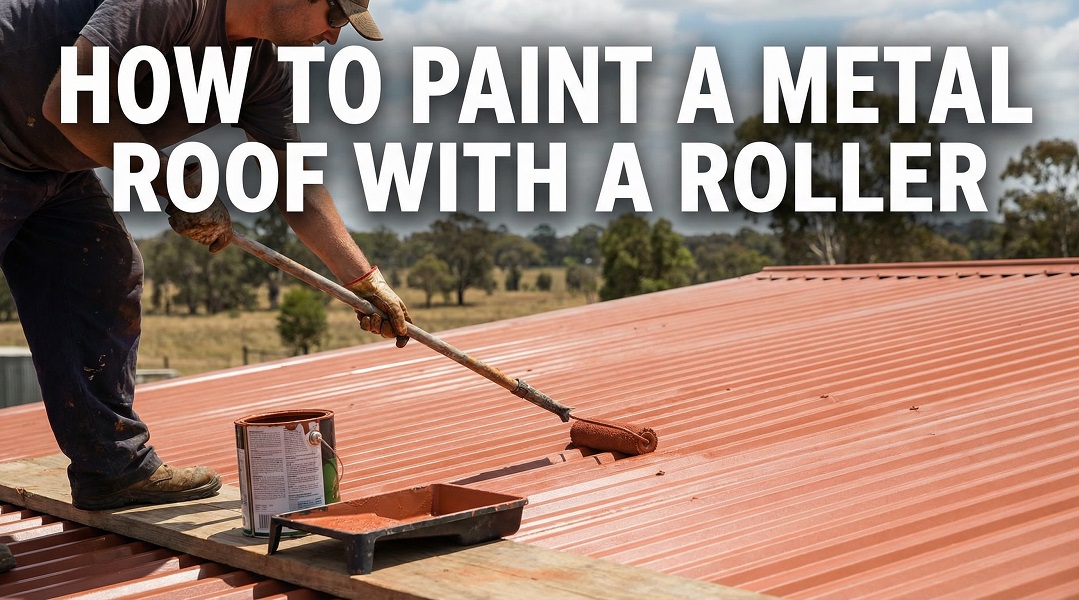
Yes, you can paint a metal roof with a roller, but success depends on proper surface preparation, using the right primer and paint system, and working in correct weather conditions. Most metal roof coating failures happen because of inadequate cleaning and prep, not the application method.
Here’s what you actually need to know to get professional results with a roller.
Why Rollers Work Well for Metal Roofs?
Coverage efficiency: A 9-inch roller covers 30-40 square feet per minute versus 10-15 square feet with a brush. For a 1,500 square foot roof, that’s 8-10 hours with a roller versus 20-25 hours brushing.
Uniform mil thickness: Rollers apply consistent coating thickness (3-5 mils wet) across the surface. Brushes create variations (2-8 mils) that lead to uneven wear and premature failure in thin spots.
Less overspray than spraying: Airless sprayers waste 15-30% of coating to overspray. Rollers waste less than 5%. On a typical residential metal roof, that’s $80-150 in saved coating.
Better for textured metal: Corrugated, ribbed, or standing seam metal roofs have profiles that rollers conform to better than brushes. The roller nap reaches into valleys and over ridges more consistently.
Cost: Quality 9-inch roller frame plus covers runs $15-35 total. Airless sprayer rental is $75-150 per day, plus you need masking and overspray protection.
How to Prepare Surface?
This determines whether your coating lasts 2 years or 10 years. Manufacturers state that 80% of coating failures result from inadequate surface prep, not coating defects.
Step 1: Remove All Loose Material
Use a wire brush, scraper, or power wire wheel to remove:
- Loose or peeling old paint
- Rust scale and oxidation
- Chalking (powdery surface coating)
- Mill scale on new galvanized steel
Why this matters: Paint bonds to what’s underneath. If you paint over loose rust or failing old coating, your new paint fails when that underlying layer lets go—usually within 6-18 months.
Test for adhesion: Press duct tape firmly onto old coating, then pull quickly. If coating comes off with tape, it all needs removal before recoating.
Step 2: Clean to Bare Metal Standards
Pressure wash at 2500-3000 PSI to remove:
- Dirt, dust, pollen
- Mold, mildew, algae
- Bird droppings
- Industrial fallout and pollutants
- Salt residue (coastal areas)
Chemical cleaning (if needed): For grease, oil, or stubborn residue, use:
- TSP (trisodium phosphate) solution: 1/4 cup per gallon water
- Commercial metal roof cleaner (follow product directions)
- Degreaser for oil/grease contamination
Rinse thoroughly: Residual cleaner prevents paint adhesion. Rinse until water sheets off cleanly with no suds or residue.
Dry completely: Minimum 24 hours in good weather, 48-72 hours in humid conditions. Metal must be completely dry—moisture under coating causes blistering and adhesion failure.
Test dryness: Tape plastic sheet to roof section overnight. If condensation appears underneath in morning, roof is still releasing moisture. Continue drying.
Step 3: Treat Rust (Critical for Steel Roofs)
Surface rust (light orange discoloration):
- Wire brush to remove loose rust
- Apply rust converter (phosphoric acid-based product that converts rust to stable compound)
- Examples: Rust-Oleum Rust Reformer, Corroseal, Ospho
- Cost: $15-30 per quart
- Allow to cure per manufacturer specs (usually 24-48 hours)
Moderate rust (flaking, pitting):
- Grind or sand to bare metal
- Apply rust-inhibiting primer immediately (within 4 hours) to prevent flash rusting
- Use epoxy or alkyd-based metal primers
Severe rust (structural compromise):
- Consider panel replacement rather than coating
- Coating won’t restore structural integrity to heavily rusted metal
Galvanized steel (zinc-coated): Remove white rust (zinc oxidation) with 50/50 white vinegar and water solution. Rinse thoroughly. The zinc surface must be etched or weathered for paint adhesion—new galvanized requires 6-12 months weathering or application of galvanized metal primer.
Step 4: Profile the Surface (Aluminum and Smooth Steel)
Smooth, non-porous metals (aluminum, painted steel, galvanized) need texture for mechanical adhesion.
Methods:
- Scuff sand with 80-120 grit: Creates microscopic scratches for paint to grip
- Scotch-Brite pad: For small areas or touch-ups
- Light chemical etch: Metal etching primer contains mild acid that creates profile
Don’t skip this: Smooth metal + smooth paint = poor adhesion = peeling within 1-2 years.
Primer Selection and Application
Not all metal roofs need primer, but most do. Here’s when and what to use.
When Primer Is Required
Bare metal (never painted): Always prime. Metal oxidizes within hours of exposure. Primer provides corrosion protection and adhesion base.
Galvanized steel: Requires galvanized metal primer. Standard primers don’t adhere to zinc coating.
Aluminum: Requires self-etching primer or aluminum-specific primer. Standard primers won’t bond.
Previously painted metal with bare spots: Prime any areas where you’ve removed old coating down to bare metal.
Rusted areas: Use rust-inhibiting primer over rust converter or bare metal after rust removal.
Primer Types for Metal Roofs
Acrylic DTM (Direct-to-Metal) Primer:
- Water-based, low VOC
- Works on steel, aluminum, galvanized (check label)
- Dries in 1-4 hours, recoat same day
- Examples: Sherwin-Williams Pro Industrial DTM, Rust-Oleum 3369 DTM
- Cost: $35-55 per gallon
Epoxy Primer:
- Superior adhesion and corrosion resistance
- Two-part mix (base + catalyst)
- For steel and aluminum
- 8-24 hour cure before topcoat
- Examples: PPG Pitt-Tech DTM Epoxy Primer
- Cost: $60-95 per gallon
Alkyd (Oil-Based) Primer:
- Excellent rust inhibition
- Good for steel, poor for aluminum or galvanized
- 12-24 hour dry time
- Higher VOC (check local regulations)
- Cost: $30-50 per gallon
Galvanized Metal Primer:
- Specifically formulated to bond to zinc coating
- Often contains acid etch component
- Examples: Rust-Oleum 3202 Galvanized Metal Primer
- Cost: $25-45 per gallon
Primer Application with Roller
Temperature and weather:
- Air temp: 50-90°F (check specific product—some require 60°F minimum)
- Surface temp: Within 5°F of air temp (avoid painting in direct sun when metal is 20-30°F hotter than air)
- Humidity: Below 85%
- No rain in forecast for 24 hours minimum
Roller selection for primer:
- Smooth metal: 3/8″ nap roller
- Lightly textured or corrugated: 1/2″ nap
- Heavily textured: 3/4″ nap
Application technique:
- Pour primer into roller tray
- Load roller evenly (not dripping)
- Apply in long, overlapping strokes following metal panel direction
- Maintain wet edge (don’t let edges dry before overlapping with next stroke)
- Target thickness: 3-5 mils wet (manufacturer specs vary)
Coverage rate: 250-400 square feet per gallon depending on surface porosity and texture. Bare, porous metal absorbs more primer than previously painted smooth surfaces.
Dry time before topcoat:
- Acrylic DTM: 1-4 hours (check label)
- Epoxy: 8-24 hours
- Alkyd: 12-24 hours
- Critical: Must be fully dry before topcoat or you’ll have adhesion and drying issues
Paint Selection for Metal Roofs
Not all “metal roof paint” performs equally. The coating system matters more than the brand.
Acrylic Latex (Most Common for Residential)
Advantages:
- Water cleanup, low VOC
- Good UV resistance
- Flexible (expands/contracts with metal)
- Available in many colors
- Cost-effective: $35-65 per gallon
Limitations:
- Moderate durability (5-10 years)
- Not ideal for high-traffic roofs
- Requires primer on most metals
Examples:
- Sherwin-Williams Duration Exterior
- Behr Premium Plus Ultra Exterior
- Benjamin Moore Regal Select Exterior
Best for: Residential steel or aluminum roofs, moderate climate zones.
100% Acrylic Elastomeric
Advantages:
- Thick coating (10-15 mils dry vs. 3-5 for standard paint)
- Excellent UV and weather resistance
- Bridges small cracks and seams
- 10-15 year lifespan
- Cost: $55-95 per gallon
Limitations:
- Heavier (harder to roller apply)
- May require two coats for proper mil build
- Can trap moisture if metal isn’t completely dry
Examples:
- Sherwin-Williams Super Deck Elastomeric
- Rust-Oleum Elastomeric Roof Coating
- Henry 887 Elastomeric Roof Coating
Best for: Moderate to high rainfall areas, roofs with minor deterioration, extended lifespan needed.
Acrylic Metal Roof Coating
Advantages:
- Formulated specifically for metal
- Contains rust inhibitors
- Better adhesion to metal than standard exterior paint
- 8-12 year lifespan
- Cost: $45-75 per gallon
Examples:
- Rust-Oleum 3200 System < 250 VOC DTM Acrylic
- Sherwin-Williams Pro Industrial Pro-Cryl Universal Primer/Finish
- PPG Speedhide Zero
Best for: All metal roof types, most climate zones, good balance of performance and cost.
Oil-Based Alkyd (Less Common Now)
Advantages:
- Excellent adhesion
- Hard, durable finish
- Good rust protection
Limitations:
- High VOC (banned or restricted in many areas)
- Longer dry time (24-48 hours)
- Yellows over time
- Becomes brittle in extreme cold
Use only if: Local regulations allow and you have specific reason to prefer alkyd over acrylic.
Silicone or Silicone-Modified
Advantages:
- Superior UV resistance (won’t chalk or fade)
- Excellent water shedding
- 15-20+ year lifespan
- Maintains flexibility in extreme temperatures
Limitations:
- Expensive: $75-150 per gallon
- Usually requires professional application
- Cannot be recoated with other paint types later
- Limited color options
Best for: Commercial roofs, extreme climate zones, when maximum longevity justifies higher cost.
Color Selection Considerations
Light colors (white, tan, light gray):
- Reflect 65-80% of solar radiation
- Keep roof 20-40°F cooler than dark colors
- Extend coating and roof lifespan
- Reduce cooling costs 10-25% (varies by climate and insulation)
- Certified “cool roof” products available with Energy Star ratings
Dark colors (brown, dark gray, black):
- Absorb 80-90% of solar radiation
- Roof surface can reach 160-190°F on summer days
- Accelerate coating degradation
- Increase cooling costs
- May benefit northern climates (snow melt, heating cost reduction)
For hot climates: Use light colors with high solar reflectance index (SRI). Check Cool Roof Rating Council (CRRC) database for rated products.
Paint Application with Roller
Weather Requirements (Critical)
Temperature:
- Air temp: 50-90°F (product specific—check label)
- Surface temp: This is more critical than air temp. Use infrared thermometer. Metal in direct sun can be 30-50°F hotter than air. Max surface temp for most coatings: 100-120°F.
- Don’t paint in direct midday sun on dark metal—surface is too hot. Work in morning, evening, or on overcast days.
Humidity: Below 85% relative humidity. Above this, coating dries too slowly and moisture can interfere with curing.
Dew point: Surface temp must be 5°F above dew point to prevent moisture condensation on surface during coating and cure.
Rain: No rain for minimum 4-8 hours for fast-dry coatings, 24-48 hours for slower-curing products. Check forecast—getting caught in rain before coating cures destroys the job.
Roller Selection
Nap length by roof texture:
| Roof Surface | Roller Nap | Reason |
|---|---|---|
| Smooth metal panels | 3/8″ nap | Minimizes texture, provides smooth finish |
| Lightly corrugated or ribbed | 1/2″ nap | Reaches into shallow valleys |
| Standing seam, deep corrugation | 3/4″ to 1″ nap | Conforms to profiles, ensures coverage |
Roller cover material:
- Woven fabric (polyester/nylon blend): Best for latex/acrylic coatings, releases paint evenly
- Microfiber: Superior finish quality, more expensive
- Avoid foam rollers: They create bubbles and don’t hold enough coating
Frame and pole:
- Quality 9-inch roller frame: $8-15
- Extension pole (4-8 feet): $15-35
- Having pole prevents constant ladder repositioning and reduces fatigue
Application Technique
Thinning (if needed):
- Most metal roof coatings apply fine straight from can
- If coating is too thick (especially in cold weather), thin per manufacturer directions
- Typical: Add 10% water (acrylic) or mineral spirits (alkyd) maximum
- Over-thinning reduces mil thickness and durability
Loading the roller:
- Pour coating into roller tray (fill tray reservoir 1/3 to 1/2 full)
- Dip roller into coating
- Roll on tray ramp to distribute evenly and remove excess
- Roller should be saturated but not dripping
Rolling technique:
- Start at highest point (ridge) and work downward (if coating drips, they run onto unpainted areas)
- Apply in long, even strokes following panel direction (length of panels for standing seam, across for corrugated)
- Maintain wet edge: Don’t let edge dry before overlapping with next stroke (creates visible lap marks)
- Use consistent pressure: Too light = thin coating (early failure), too heavy = excess coating (drips, sags, waste)
- Work in 3-4 foot wide sections: Complete each section before moving to next
- Back-roll seams and overlaps: Go over seams with light pressure to ensure complete coverage
Edges and details:
- Use 3-4 inch brush for roof edges, penetrations (vents, pipes), and areas roller can’t reach
- Maintain same wet mil thickness as rollered areas
- Brush technique: Long, smooth strokes following metal grain, not short dabs
Coverage rate (varies by product and surface):
- Smooth metal: 350-450 sq ft per gallon
- Lightly textured: 250-350 sq ft per gallon
- Corrugated/deeply textured: 150-250 sq ft per gallon
Number of coats:
- One coat: Acceptable only if manufacturer approves and you achieve full mil thickness (typically 3-5 mils dry)
- Two coats: Recommended for longevity. First coat seals surface, second coat provides full protection and uniform color
- Wait between coats: Minimum 2-4 hours for fast-dry acrylics, 24 hours for slower products (check label)
Drying and Curing Time (Critical for Success)
Drying and curing are different:
- Dry to touch: Surface feels dry (1-4 hours typically)
- Dry for recoat: Can apply second coat without disturbing first (2-8 hours)
- Dry for rain: Won’t wash off in rain (4-24 hours depending on product)
- Fully cured: Coating reaches maximum hardness and durability (7-30 days)
Realistic Drying Times by Conditions (Acrylic Metal Roof Coating)
| Conditions | Dry to Touch | Recoat Time | Rain Safe | Full Cure |
|---|---|---|---|---|
| Ideal: 70-80°F, 40-60% humidity, light breeze | 1-2 hours | 2-4 hours | 4-8 hours | 7-14 days |
| Warm: 80-90°F, low humidity | 1 hour | 2-3 hours | 4-6 hours | 7-10 days |
| Cool: 50-60°F, moderate humidity | 3-5 hours | 6-8 hours | 12-24 hours | 14-21 days |
| Cold/humid: 50°F, 70%+ humidity | 6-12 hours | 12-24 hours | 24-48 hours | 21-30 days |
Avoid foot traffic until fully cured. Walking on partially cured coating creates permanent marks and disturbs the film.
Common Mistakes That Cause Failure
Painting over dirt/oxidation: Coating bonds to dirt, dirt releases from metal, coating fails. Always clean and prep thoroughly.
Skipping primer on bare metal: Topcoat alone provides inadequate corrosion protection and adhesion. Use proper primer system.
Painting in wrong weather: Too cold, too hot, too humid, or rain approaching. Follow manufacturer environmental specs.
Insufficient mil thickness: Thin coating (1-2 mils) fails quickly. Apply proper thickness (3-5 mils minimum, product specific).
One coat when two required: Manufacturer specs exist for a reason. Don’t shortcut coat requirements.
Wrong paint type for metal: Using standard exterior house paint instead of metal-specific coating. Adhesion and flexibility suffer.
Bottom Line
Surface preparation is everything—80% of coating failures come from inadequate cleaning and prep, not the paint or application method. Clean thoroughly, remove all rust and loose material, and profile smooth surfaces before painting.