
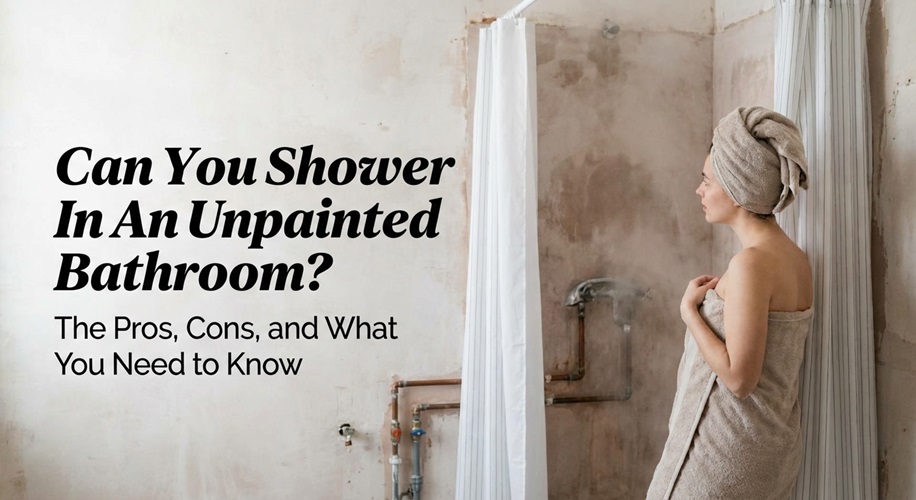
Yes, you can shower in an unpainted bathroom when the plumbing works properly, walls are moisture-resistant (concrete, cement board, or properly installed tile backer), and adequate ventilation exists. However, showering in a bathroom with bare drywall or unprotected surfaces risks moisture damage, mold growth, and costly repairs.
The critical factor isn’t whether walls are painted—it’s whether they can handle repeated moisture exposure without degrading. Understanding your wall materials and taking proper precautions determines whether showering is safe or potentially problematic.
Here’s everything you need to know about using an unpainted bathroom safely.
When You CAN Shower in an Unpainted Bathroom
Several conditions make showering in an unfinished bathroom perfectly acceptable.
Condition #1: Moisture-Resistant Wall Materials
Certain wall materials handle water exposure without problems:
Concrete Walls
Poured concrete or concrete block walls are inherently water-resistant. Moisture won’t damage the structure, though it may leave mineral deposits or water stains over time. These walls can handle unlimited shower use without protective coatings.
Cement Board (Hardiebacker, Durock)
Cement board is designed specifically for wet areas. It won’t absorb water, swell, or degrade from moisture exposure. Tile installers use it behind showers precisely because it handles water indefinitely.
Tile Backer Board
Similar to cement board, tile backer materials resist moisture completely. Even without tile installed, these substrates can handle shower spray without damage.
Properly Waterproofed Surfaces
If waterproofing membrane (RedGard, Kerdi, or similar) has been applied, the substrate underneath is protected regardless of whether finish materials are installed.
Condition #2: Functional Plumbing
The shower works normally when:
- Hot and cold water supply lines are connected
- Showerhead and valve operate correctly
- Drain is properly installed and connected to waste line
- No leaks exist at connections or fittings
- Water pressure is adequate
Cosmetic finishes don’t affect plumbing function. A shower works identically whether walls are painted or not.
Condition #3: Adequate Ventilation
Proper ventilation prevents moisture problems in any bathroom:
Exhaust Fan Requirements:
- Minimum 50 CFM (cubic feet per minute) for standard bathrooms
- 1 CFM per square foot for larger bathrooms
- Must vent to exterior (not into attic)
- Should run during showering and 15-20 minutes after
Window Ventilation:
- Operable window provides natural ventilation
- Less effective than mechanical exhaust
- Better than no ventilation
Cross-Ventilation:
- Keep bathroom door open after showering
- Allows humid air to dissipate throughout home
- Helps when exhaust capacity is limited
When You SHOULDN’T Shower in an Unpainted Bathroom
Certain conditions make showering inadvisable or risky.
Bare Drywall Walls
Standard drywall (gypsum board) absorbs moisture readily. Problems develop quickly:
What happens to wet drywall:
- Paper facing absorbs water and softens
- Gypsum core swells and weakens
- Joint compound dissolves and crumbles
- Tape adhesive fails, causing seam separation
- Mold grows within 24-48 hours of sustained moisture
Timeline for damage:
| Exposure Level | Time Until Visible Damage |
|---|---|
| Direct spray contact | 1-3 days |
| High humidity only | 1-2 weeks |
| Occasional light moisture | 2-4 weeks |
| Properly ventilated, brief showers | 4-6 weeks |
Recommendation: Avoid showering with bare drywall walls. If unavoidable, limit to 1-2 weeks maximum with excellent ventilation and very short showers.
No Ventilation Available
Without proper ventilation:
- Humidity levels spike to 80-100%
- Moisture condenses on all surfaces
- Drying time extends dramatically
- Mold risk increases significantly
- Even moisture-resistant materials can develop issues
Minimum requirement: At least an operable window if no exhaust fan exists.
Extended Renovation Timeline
If your bathroom renovation will take months:
- Daily moisture exposure accumulates damage
- Temporary measures become inadequate
- Materials may need replacement before finishing
- Costs increase significantly
Better approach: Use an alternative bathroom during extended renovations whenever possible.
Visible Mold Already Present
If you see mold growth:
- Stop using the shower immediately
- Address moisture source
- Remediate mold before continuing
- Ensure proper ventilation before resuming use
Understanding Bathroom Wall Materials and Moisture
Different materials respond to moisture very differently.
Moisture Tolerance by Material
| Material | Water Resistance | Humidity Tolerance | Shower Safe? |
|---|---|---|---|
| Poured concrete | Excellent | Excellent | Yes |
| Concrete block | Excellent | Excellent | Yes |
| Cement board | Excellent | Excellent | Yes |
| Tile backer | Excellent | Excellent | Yes |
| Waterproofed drywall | Good | Good | Yes (with coating) |
| Green board | Moderate | Moderate | Limited time |
| Purple board | Good | Good | Better than green |
| Standard drywall | Poor | Poor | Not recommended |
| Plaster | Moderate | Moderate | Limited time |
What “Green Board” Really Means
Moisture-resistant drywall (green board) is often misunderstood:
What it is:
- Drywall with water-resistant paper facing
- Designed for high-humidity areas
- NOT waterproof—just moisture-resistant
What it’s for:
- Bathroom walls NOT directly in shower spray
- Behind vanities and toilets
- Ceiling areas with humidity exposure
What it’s NOT for:
- Direct water contact (shower walls)
- Substitute for cement board in wet areas
- Long-term exposure without finish coating
Bottom line: Green board can handle humidity during renovation but still needs paint or other protective finish eventually.
Potential Problems from Showering in Unpainted Bathrooms
Know what can go wrong to prevent or address issues early.
Problem #1: Mold and Mildew Growth
Causes:
- Sustained humidity above 60%
- Moisture trapped in porous materials
- Inadequate ventilation
- Organic materials (drywall paper) as food source
Signs:
- Musty odor
- Black, green, or white spots on surfaces
- Discoloration spreading over time
- Allergic reactions (sneezing, irritation)
Prevention:
- Maximize ventilation
- Minimize shower duration
- Wipe down surfaces after showering
- Monitor for early signs
Remediation:
- Address within 24-48 hours of discovery
- Clean with appropriate mold-killing products
- Fix moisture source before it returns
Problem #2: Drywall Degradation
Causes:
- Water absorption into paper facing
- Humidity cycling (wet/dry repeatedly)
- Insufficient drying time between showers
Signs:
- Soft or spongy texture
- Bubbling or peeling paper
- Visible water stains
- Warping or swelling
- Crumbling at edges or seams
Consequences:
- May require partial or complete replacement
- Paint won’t adhere properly to damaged drywall
- Hidden mold may develop behind damaged areas
Problem #3: Joint Tape Failure
Causes:
- Moisture dissolving joint compound
- Paper tape losing adhesion
- Repeated wet/dry cycling
Signs:
- Cracks appearing along seams
- Tape lifting or bubbling
- Compound crumbling or flaking
- Visible gaps at joints
Repair required:
- Cut out failed tape
- Apply new compound and tape
- Prime before painting
Problem #4: Staining and Deposits
Causes:
- Hard water mineral deposits
- Soap residue accumulation
- Dirt and oils from body
- Dye transfer from products
Issues:
- Stains difficult to remove from raw materials
- May show through paint later
- Creates uneven surface for finishing
Prevention:
- Wipe walls after showering
- Use squeegee on smooth surfaces
- Address stains before they set
How Long Can You Shower in an Unpainted Bathroom?
Realistic timelines based on wall materials and conditions:
With Moisture-Resistant Walls (Concrete, Cement Board)
Duration: Indefinitely
Considerations:
- Surface may stain or show mineral deposits
- Clean before painting for proper adhesion
- No structural concerns
With Green Board or Moisture-Resistant Drywall
Duration: 2-4 weeks with precautions
Requirements:
- Exhaust fan running during and after showers
- Short showers (under 10 minutes)
- Bathroom door open after use
- No direct water spray on walls if possible
With Standard Drywall
Duration: 1-2 weeks maximum (not recommended)
Requirements:
- Excellent ventilation mandatory
- Very short showers only
- Wipe down walls after each use
- Monitor daily for damage signs
- Have backup bathroom if possible
With No Ventilation
Duration: Avoid entirely
If absolutely necessary:
- Single shower only
- Maximum ventilation through windows and doors
- Portable fan directed at wet surfaces
- Complete drying before any additional moisture
Tips for Safely Showering in an Unpainted Bathroom
If you must use an unfinished bathroom, minimize risks with these strategies.
Maximize Ventilation
During showering:
- Run exhaust fan on high
- Open bathroom window if available
- Use a portable fan for air circulation
- Keep bathroom door slightly open
After showering:
- Continue exhaust fan for 20-30 minutes minimum
- Open bathroom door fully
- Use dehumidifier if humidity remains high
- Consider leaving exhaust fan on continuously during renovation
Reduce Moisture Production
Shower habits:
- Take shorter showers (5-10 minutes)
- Use cooler water (less steam production)
- Minimize splashing on walls
- Point showerhead toward center of tub/shower
Temperature management:
- Warmer showers = more humidity
- Cooler showers = less moisture in air
- Balance comfort with moisture reduction
Protect Vulnerable Surfaces
Temporary barriers:
- Hang plastic sheeting to shield unfinished walls
- Use shower curtain to contain spray
- Apply painter’s plastic as temporary moisture barrier
- Position curtain to maximize wall protection
Surface treatment:
- Consider temporary primer on drywall (quick protection)
- Apply waterproofing membrane if delayed finish
- Seal vulnerable areas with appropriate products
Manage Moisture After Showering
Immediate actions:
- Wipe down walls with towel or squeegee
- Remove standing water from surfaces
- Check corners and low spots for pooling
Ongoing management:
- Use bathroom dehumidifier
- Place moisture absorbers (DampRid or similar)
- Monitor humidity levels with hygrometer
- Target under 60% relative humidity
Preparing Walls After Showering in Unpainted Bathroom
Before painting, address any moisture exposure issues.
Inspection Checklist
- Check all surfaces for soft spots or damage
- Look for mold or mildew growth
- Examine tape seams for lifting or cracking
- Test drywall firmness by pressing gently
- Smell for musty odors indicating hidden moisture
- Verify complete drying before painting
Repair Any Damage
Minor issues:
- Sand rough spots
- Re-tape lifted seams
- Fill small holes or imperfections
- Clean stains and deposits
Moderate damage:
- Cut out soft or damaged drywall sections
- Patch with new drywall
- Re-tape and mud seams
- Allow complete drying before priming
Significant damage:
- Replace entire panels if widespread issues
- Check behind walls for hidden mold
- Address structural concerns if present
- Consider professional assessment
Surface Preparation
Before priming:
- Allow minimum 24-48 hours drying time after last shower
- Clean all surfaces thoroughly
- Remove soap residue and mineral deposits
- Sand any rough areas smooth
Primer selection:
- Use moisture-resistant primer in bathrooms
- Consider mold-resistant primer formulations
- Apply full coverage—no missed spots
- Allow proper drying between coats
Alternative Solutions During Renovation
When possible, avoid the unpainted bathroom entirely.
Use Another Bathroom
If available:
- Primary option during renovation
- No moisture concerns
- No special precautions needed
- Better for mental well-being during construction
Temporary Shower Alternatives
Gym membership:
- Access to showers during renovation
- Often affordable short-term option
- Bonus: fitness access included
Neighbor or family:
- Ask to use their shower temporarily
- Offer compensation or trade favors
- Maintains relationships and cleanliness
Portable shower:
- Camping showers for emergency use
- Can set up in basement or utility area
- Not ideal for extended periods
Expedite the Project
Fast-track finishing:
- Prioritize bathroom completion over other areas
- Consider hiring help to speed timeline
- Focus on functional completion first
- Aesthetic details can follow later
Frequently Asked Questions
How long after painting can I shower in the bathroom?
Wait minimum 24-48 hours for latex paint and 48-72 hours for oil-based paint before showering. Paint needs time to fully cure; moisture exposure too soon can cause peeling, bubbling, or poor adhesion. Some manufacturers recommend waiting up to 30 days before exposing paint to sustained moisture. Check your specific paint’s instructions.
Will shower steam damage unpainted drywall?
Yes, steam damages unpainted drywall over time. Steam carries moisture that condenses on cooler surfaces, saturating drywall paper facing. Repeated steam exposure without adequate drying causes swelling, mold growth, and structural weakening. Proper ventilation is essential to remove steam before it condenses.
Can I use a space heater to dry the bathroom faster?
Space heaters can help but have limitations. They warm air (increasing moisture capacity) but don’t remove humidity. For best results, combine a space heater with an exhaust fan or dehumidifier. Never leave space heaters unattended, and keep them away from water sources.
What’s the difference between primer and paint for moisture protection?
Primer seals the substrate and provides adhesion for paint but offers limited moisture protection alone. Paint (especially bathroom-specific formulations) provides the finished moisture barrier. Both are needed—primer alone won’t protect drywall from shower moisture long-term.
Should I use bathroom paint or regular paint?
Use bathroom-specific paint formulations. They contain mildewcides, have higher moisture resistance, and are formulated to resist peeling in high-humidity environments. Regular paint can work with proper primer but won’t perform as well in wet conditions over time.
Can I shower if only the ceiling is unpainted?
Ceiling exposure is significant because hot, moist air rises. An unpainted bathroom ceiling experiences substantial moisture contact. However, if walls are properly finished and ventilation is adequate, brief showering with an unpainted ceiling is less risky than unpainted walls receiving direct spray.
How do I know if my drywall has moisture damage?
Signs of moisture-damaged drywall include soft or spongy texture when pressed, visible staining or discoloration, bubbling or peeling paper facing, musty odor, lifted tape at seams, warping or bulging surfaces, and mold growth (often appears as black, green, or white spots).
Is green board waterproof enough for shower walls?
No. Green board (moisture-resistant drywall) is NOT waterproof and should NOT be used in shower surrounds. It’s designed for humid bathroom areas that don’t receive direct water contact—behind toilets and vanities, for example. Shower walls require cement board, tile backer, or waterproofing membrane.
Cost Considerations: Damage vs. Prevention
Understanding potential costs helps prioritize properly.
Cost of Moisture Damage Repairs
| Issue | Typical Repair Cost |
|---|---|
| Mold remediation (small area) | $500-1,500 |
| Mold remediation (extensive) | $3,000-10,000+ |
| Drywall replacement (one wall) | $200-500 |
| Full bathroom drywall replacement | $800-2,000 |
| Joint tape repair | $100-300 |
| Complete bathroom renovation restart | $5,000-15,000+ |
Cost of Prevention Measures
| Prevention Method | Cost |
|---|---|
| Quality exhaust fan | $50-200 |
| Portable dehumidifier | $30-100 |
| Temporary plastic sheeting | $10-30 |
| Quick primer application | $20-50 |
| Moisture absorbers | $5-15 |
Bottom line: Prevention costs are minimal compared to repair expenses. Investing in ventilation and temporary protection saves significant money if moisture problems develop.
Quick Reference: Decision Guide
Should you shower in your unpainted bathroom?
YES, if:
- ✅ Walls are concrete, cement board, or tile backer
- ✅ Exhaust fan is installed and functional
- ✅ Renovation will complete within 1-2 weeks
- ✅ You can take short showers with maximum ventilation
- ✅ No alternative bathroom is available
NO, if:
- ❌ Walls are bare standard drywall
- ❌ No ventilation exists (no fan, no window)
- ❌ Renovation timeline is months away
- ❌ Another bathroom is available
- ❌ You’ve already noticed moisture damage
PROCEED WITH CAUTION, if:
- ⚠️ Walls are green board or moisture-resistant drywall
- ⚠️ Ventilation is limited (window only)
- ⚠️ Renovation timeline is 2-4 weeks
- ⚠️ You can implement protective measures
Wrap Up
Showering in an unpainted bathroom is possible—but whether it’s advisable depends entirely on your wall materials and ventilation situation.
Key takeaways:
- Wall material matters most: Concrete and cement board handle moisture indefinitely. Bare drywall doesn’t.
- Ventilation is critical: Without proper exhaust, even moisture-resistant materials develop problems.
- Time limits apply: The longer you shower in unfinished spaces, the greater the risk.
- Prevention beats repair: Temporary protective measures cost far less than fixing moisture damage.
- Use alternatives when possible: If another bathroom exists, use it during renovation.
When you must use an unpainted bathroom, minimize moisture production, maximize ventilation, protect vulnerable surfaces, and complete the project as quickly as possible. A few weeks of careful use rarely causes problems. Months of daily moisture exposure almost certainly will.
Finish the project right, and you’ll enjoy your bathroom for years without moisture-related issues.
Good luck with your renovation!