
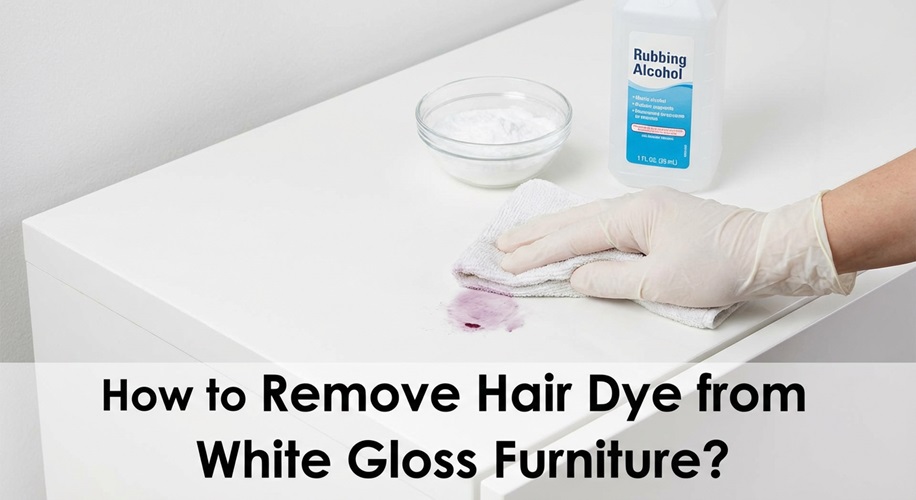
You can remove hair dye from white gloss furniture using baking soda paste, rubbing alcohol, nail polish remover, or dish soap and water. The key is acting quickly—fresh stains lift far easier than set-in ones.
Hair dye on white gloss furniture looks alarming, but it’s almost always fixable. The smooth, non-porous surface that makes gloss furniture attractive also works in your favor for stain removal. Unlike fabric or wood, gloss finishes resist deep penetration when you act promptly.
Here’s everything you need to know to restore your furniture to its original condition.
For fresh hair dye stains (within minutes):
→ Wipe immediately with a damp cloth
→ Apply dish soap solution and gently rub
→ Rinse and dry
For recent stains (within hours):
→ Use rubbing alcohol on a soft cloth
→ Gently blot and wipe
→ Rinse with clean water
For stubborn or set stains:
→ Apply baking soda paste
→ Let sit 10-15 minutes
→ Gently scrub and rinse
Important: Always test any cleaning method on a hidden area first to ensure it won’t damage the gloss finish.
Does Hair Dye Come Out of Gloss Furniture?
Yes, hair dye comes out of gloss furniture in most cases. Success depends on three factors:
1. Response Time
The sooner you address the stain, the easier removal becomes. Fresh dye wipes away with minimal effort. Set-in stains require more aggressive methods.
2. Dye Type
- Temporary dyes: Easiest to remove—often lift with just soap and water
- Semi-permanent dyes: Moderate difficulty—usually respond to alcohol-based cleaners
- Permanent dyes: Most challenging—may require multiple treatment attempts
3. Furniture Finish Quality
Higher-quality gloss finishes with proper sealant resist staining better than budget furniture. Scratched or worn finishes allow dye to penetrate deeper.
Why Hair Dye Ends Up on Furniture
Understanding how dye reaches your furniture helps prevent future incidents.
Common Causes
During Application:
- Dye splashing when mixing or applying
- Drips running down neck onto nearby surfaces
- Leaning against furniture during processing time
- Setting dye bottles or applicators on surfaces
From Transfer:
- Touching furniture with dye-covered gloves
- Resting freshly dyed (still damp) hair on furniture
- Placing dye-stained towels on surfaces
- Dye residue on hands after removing gloves
Environmental Spread:
- Airborne dye particles settling on surfaces
- Dye traveling on steam in poorly ventilated spaces
- Splashing during rinsing process
- Walking through house before fully rinsing
5 Methods to Remove Hair Dye from White Gloss Furniture
Each method suits different stain severity levels. Start with the gentlest approach and progress to stronger methods only if needed.
Method #1: Dish Soap and Warm Water
Best for: Fresh stains, light discoloration, first attempt
You’ll need:
- Mild dish soap
- Warm water
- Soft lint-free cloth or microfiber towel
- Clean water for rinsing
- Dry cloth
Steps:
- Mix solution — Add 2-3 drops of dish soap to a bowl of warm water
- Dampen cloth — Dip cloth in solution, wring until damp but not dripping
- Blot the stain — Press cloth onto stain, working from edges toward center
- Gently rub — Use circular motions with light pressure
- Rinse — Wipe area with clean, damp cloth to remove soap residue
- Dry — Buff with dry cloth to prevent water spots
Tips:
- Don’t oversaturate the surface—excess water can damage some finishes
- Change to a clean section of cloth frequently to avoid reapplying dye
- Repeat if needed before moving to stronger methods
Method #2: Rubbing Alcohol (Isopropyl Alcohol)
Best for: Recent stains (within 24 hours), moderate discoloration
You’ll need:
- Isopropyl alcohol (70% concentration or higher)
- Soft lint-free cloths
- Cotton balls or pads
- Clean water
- Dry cloth
Steps:
- Test first — Apply alcohol to hidden area, wait 5 minutes, check for damage
- Apply alcohol — Dampen cotton ball or cloth with rubbing alcohol
- Blot stain — Press onto stain for 10-15 seconds to break down dye
- Wipe gently — Use light strokes moving toward stain center
- Repeat — Use fresh cotton ball as it picks up dye color
- Rinse and dry — Remove alcohol residue with damp cloth, then dry
Alternative products:
- Glass cleaner (contains alcohol)
- Hand sanitizer (60%+ alcohol content)
- Jewelry cleaner
Caution: Alcohol can dull some gloss finishes if left too long. Work quickly and rinse thoroughly.
Method #3: Baking Soda Paste
Best for: Stubborn stains, set-in discoloration, stains that resist other methods
You’ll need:
- Baking soda
- Water
- Small bowl
- Soft cloth or non-abrasive sponge
- Clean water for rinsing
- Dry cloth
Steps:
- Create paste — Mix 2 tablespoons baking soda with 1 tablespoon water until thick paste forms
- Test first — Apply small amount to hidden area to check for scratching
- Apply to stain — Spread paste over stained area in thin layer
- Wait — Let sit 10-15 minutes (don’t let it dry completely)
- Gently scrub — Use soft cloth in circular motions with minimal pressure
- Rinse thoroughly — Remove all baking soda residue with damp cloth
- Dry and polish — Buff dry with clean cloth
Enhanced version:
Add a few drops of white vinegar to the paste for extra cleaning power. The fizzing reaction helps lift stubborn pigment.
Important: Baking soda is mildly abrasive. Use very light pressure on gloss surfaces to avoid micro-scratches.
Method #4: Nail Polish Remover (Acetone)
Best for: Stubborn permanent dye stains, last resort for resistant stains
You’ll need:
- Acetone-based nail polish remover (or pure acetone)
- Cotton balls
- Soft cloths
- Clean water
- Furniture polish (optional, for aftercare)
Steps:
- Test critically — Acetone can damage some finishes. Test on hidden area and wait 10 minutes
- Apply sparingly — Dampen cotton ball with small amount of acetone
- Quick application — Blot stain briefly—don’t let acetone sit
- Wipe immediately — Remove acetone and dye residue with clean cloth
- Rinse quickly — Wipe with damp cloth to remove all acetone
- Repeat if needed — Use fresh cotton balls for each application
- Restore finish — Apply furniture polish to treated area
Warnings:
- Never use on lacquered, painted, or unsealed surfaces
- Acetone evaporates quickly but can strip finish if left too long
- Work in well-ventilated area
- Keep away from flames (highly flammable)
Method #5: Magic Eraser (Melamine Foam)
Best for: Surface stains, light discoloration, finishing touches after other methods
You’ll need:
- Magic Eraser or generic melamine foam sponge
- Water
- Soft cloth
- Furniture polish (recommended for aftercare)
Steps:
- Dampen eraser — Wet the Magic Eraser and squeeze out excess water
- Test area — Try on hidden spot first—melamine can dull high-gloss finishes
- Gentle strokes — Rub stain with very light pressure
- Check frequently — Stop as soon as stain lifts to minimize finish impact
- Wipe clean — Remove residue with damp cloth
- Restore shine — Apply appropriate furniture polish
Caution: Magic Erasers are mildly abrasive. They can remove thin clear coats or create dull spots on high-gloss surfaces. Use as a last resort and with extreme care.
Method Comparison Chart
| Method | Best For | Aggressiveness | Risk Level | Speed |
|---|---|---|---|---|
| Dish Soap | Fresh stains | Gentle | Very Low | Fast |
| Rubbing Alcohol | Recent stains | Moderate | Low | Fast |
| Baking Soda Paste | Set stains | Moderate | Low-Medium | Medium |
| Nail Polish Remover | Stubborn stains | Aggressive | Medium-High | Fast |
| Magic Eraser | Surface stains | Moderate | Medium | Fast |
Recommended order: Start with dish soap, progress to rubbing alcohol, try baking soda paste, then acetone only if nothing else works.
What NOT to Use on White Gloss Furniture
Some common cleaning products can permanently damage gloss finishes:
Avoid These:
| Product | Why It’s Harmful |
|---|---|
| Bleach | Can yellow white finishes, damages sealant |
| Abrasive cleaners | Scratch and dull gloss surface |
| Steel wool or rough scrubbers | Create visible scratches |
| Furniture stripper | Removes finish entirely |
| Oven cleaner | Too caustic for furniture finishes |
| Ammonia-based cleaners | Can cloud or dull gloss coating |
| Harsh solvents | May dissolve or warp finish |
Proceed With Caution:
- Hydrogen peroxide (can bleach some finishes)
- WD-40 (leaves residue, may attract dust)
- Toothpaste (some formulas are too abrasive)
Aftercare: Restoring the Gloss Finish
After removing hair dye, your furniture may need some attention to restore its original shine.
Immediate Aftercare
- Rinse thoroughly — Remove all cleaning product residue
- Dry completely — Buff with soft, dry microfiber cloth
- Inspect finish — Look for dullness, haze, or damage
If Finish Appears Dull
For minor dullness:
- Apply small amount of white furniture polish
- Buff with clean microfiber cloth
- Repeat if needed
For more significant damage:
- Use gloss furniture restoration product
- Apply automotive wax designed for clear coats
- Consider professional furniture polishing service
Products for Gloss Furniture Care
- Pledge Multi-Surface Furniture Polish
- Howard Restor-A-Finish (for deeper restoration)
- Automotive spray wax (Meguiar’s or similar)
- Microfiber polishing cloths
Preventing Hair Dye Stains on Furniture
Prevention eliminates the need for stain removal entirely.
Before Dyeing
Prepare your space:
- Choose a room away from valuable furniture
- Cover nearby furniture with plastic sheets or old towels
- Create a dedicated dyeing station with disposable coverings
- Remove decorative items from the area
Prepare yourself:
- Wear old, dark clothing
- Use a hairdressing cape
- Have old towels dedicated to hair dyeing
- Wear gloves throughout the entire process
During Dyeing
Minimize mess:
- Work over a sink or covered surface
- Keep paper towels nearby for immediate drip cleanup
- Avoid walking through the house with dye processing
- Keep dye bottles upright on protected surfaces
Control the environment:
- Ensure good ventilation to prevent airborne particles
- Close doors to contain potential splatter
- Don’t rush—deliberate movements prevent accidents
After Dyeing
Immediate actions:
- Rinse hair thoroughly before leaving bathroom
- Wipe down all surfaces that contacted dye
- Dispose of protective coverings carefully
- Clean applicator tools immediately
The 24-hour rule:
- Keep freshly dyed hair away from light-colored furniture
- Use dark towels on furniture backs if sitting
- Avoid leaning head against upholstered pieces
Frequently Asked Questions
How quickly does hair dye stain gloss furniture?
Hair dye can begin bonding to surfaces within minutes. Gloss furniture’s sealed surface provides some protection, but pigments can start setting within 15-30 minutes. Fresh stains (under 10 minutes) typically wipe away easily. Stains left for hours or overnight become significantly harder to remove.
Will rubbing alcohol damage white gloss furniture?
Rubbing alcohol is generally safe for gloss furniture when used correctly. However, prolonged contact or excessive amounts can dull some finishes. Always test on a hidden area first, work quickly, and rinse thoroughly. Avoid using on lacquered, painted, or antique furniture without professional advice.
Can I use bleach to remove hair dye from white furniture?
Avoid using bleach on gloss furniture. While it seems logical for white surfaces, bleach can yellow the finish, damage the protective coating, and create permanent discoloration. Stick to gentler methods like rubbing alcohol or baking soda paste, which effectively remove dye without finish damage.
What if the hair dye stain won’t come out completely?
For persistent stains, try multiple methods in sequence—sometimes combining approaches works better than repeating one. If staining remains after trying all methods, consider professional furniture restoration services. For deeply set stains on affordable furniture, furniture touch-up pens or paint designed for gloss surfaces can cover remaining discoloration.
How do I remove hair dye from IKEA gloss furniture?
IKEA’s gloss furniture (like MALM or BESTA series) typically has a foil or lacquer finish. Start with dish soap, then try rubbing alcohol. Avoid acetone on IKEA furniture—it can dissolve the foil layer. Baking soda paste (used gently) is usually the strongest method safe for these finishes.
Does permanent hair dye stain worse than temporary?
Yes. Permanent hair dye contains stronger pigments and oxidizing agents designed for lasting penetration—this same chemistry makes it harder to remove from surfaces. Temporary and semi-permanent dyes contain less concentrated pigments and typically lift more easily from gloss furniture, often with just soap and water.
Can I use a Magic Eraser on high-gloss furniture?
Use Magic Erasers with extreme caution on high-gloss surfaces. They contain melamine foam, which works like ultra-fine sandpaper. While effective at removing stains, they can also remove the gloss finish itself, leaving dull patches. Test on a hidden area first and use minimal pressure.
How do I restore shine after removing hair dye from gloss furniture?
After stain removal, the area may appear slightly dull. Apply furniture polish designed for gloss surfaces and buff with a clean microfiber cloth. For more significant dullness, automotive spray wax (like Meguiar’s) works well on furniture finishes. Apply thin layers and buff thoroughly.
Quick Reference Guide
Stain Age → Method to Try First
| Stain Age | First Method | If That Fails |
|---|---|---|
| Under 5 minutes | Damp cloth only | Dish soap solution |
| 5-30 minutes | Dish soap solution | Rubbing alcohol |
| 30 min – 2 hours | Rubbing alcohol | Baking soda paste |
| 2-24 hours | Baking soda paste | Multiple methods |
| Over 24 hours | Baking soda paste | Acetone (test first) |
Supplies to Keep on Hand:
- Rubbing alcohol (70%+)
- Baking soda
- Dish soap
- Microfiber cloths
- Cotton balls
- Furniture polish
Wrap Up
Hair dye on white gloss furniture looks disastrous but usually cleans up completely with the right approach. The critical factor is speed—address stains immediately whenever possible.
Remember these key points:
- Always test cleaning methods on hidden areas first
- Start with the gentlest method and progress to stronger options
- Work from the outside of stains toward the center
- Rinse thoroughly after any cleaning treatment
- Restore the finish with appropriate furniture polish
Prevention remains the best strategy. Cover nearby furniture before dyeing, work in a contained space, and keep cleanup supplies ready for any accidents.
Your white gloss furniture can survive hair dye incidents—just act fast and choose the right method for the stain.
Good luck!